Bradford’s Victorian Crime Chemist: The Forensic Casebook of Felix Marsh Rimmington
By Adrian and Dawn L. Bridge
Modern readers, along with television viewers, have been encouraged, rightly, to believe that pathologists play a key role in solving crime. During the mid-Victorian period, however, pathology was in its infancy, and other scientists, particularly chemists, played a vital part in investigating and solving many crimes – particularly those that involved poisoning. Broadly speaking, there were three main types of chemist who possessed the necessary forensic toxicological expertise to be of use to coroners and police in the detection of various crimes and misdemeanours. Chemistry academics and lecturers were often called upon to give expert testimony in court, at the request of both police and coroners. In addition, a small number of hospital-based surgeons were also called upon to conduct autopsies and other medical/toxicological examinations. Finally, there was a small select band of independent analysts who developed successful careers as consulting chemists. One of the most renowned of these independent chemists was Felix Marsh Rimmington, a Bradford chemist who acquired a national reputation for his work in assisting both police and courts in a variety of criminal and civil matters.
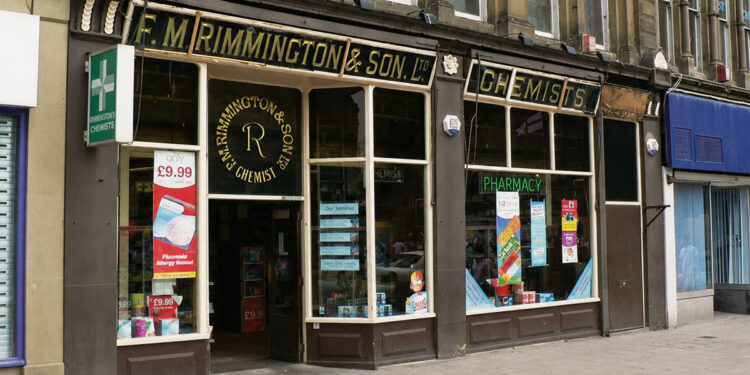
Rimmington was born in Gateforth, near Selby, in North Yorkshire in 1818, and came to live in Bradford when he was just four years old. He seemed destined for a career as a chemist from a very early age. His uncle was a chemist, as was his younger brother, and as a teenager, Felix was apprenticed to a Huddersfield chemist before moving to London to act as an assistant to Peter Squire, who was Queen Victoria’s personal chemist. By 1842, Felix Rimmington was back in Bradford and running his own chemist’s shop in Ivygate. The pharmacy thrived, and Rimmington moved his business to more commodious premises in Bridge Street, Bradford, during 1875.
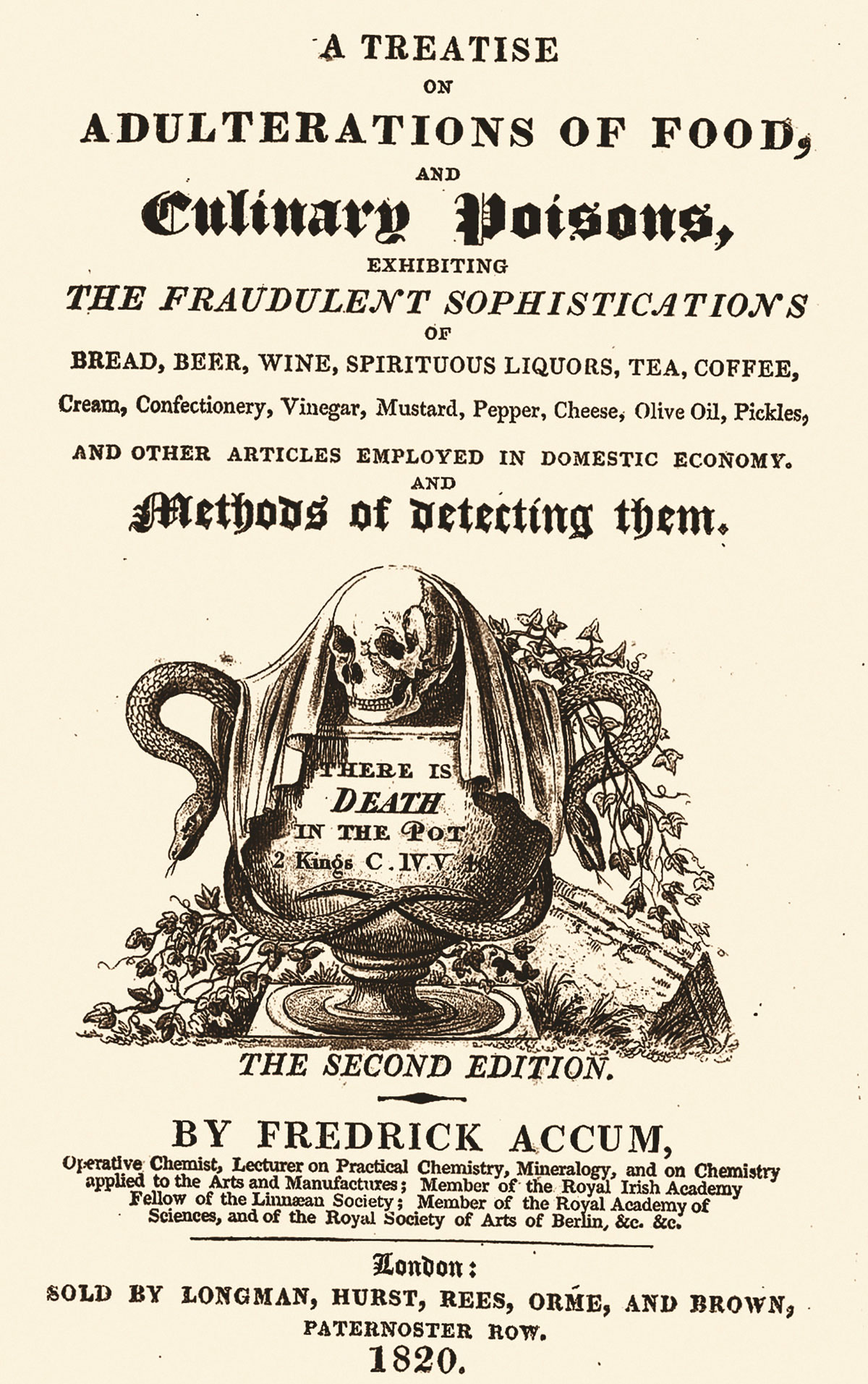
Treatise on food adulterations, 1820.
(© Wellcome Images)
“Social stigma”
Felix Rimmington was, however, far more than just a pharmacist. His intellectual curiosity drove him to attend chemistry and pharmaceutical conferences around the country, where he listened to the ideas of distinguished chemists, and also presented papers of his own. Between the 1850s and the 1890s, Rimmington made countless appearances as an ‘expert chemist’ in both criminal and civil court cases. From the 1830s onwards, the status of scientific ‘expert’ witnesses in court rose exponentially, and there were plenty of professional opportunities available for clever, well-respected chemists like Rimmington to conduct medico-legal analyses. These opportunities had certainly been enhanced by the passage of the 1836 Medical Witnesses Act, which allowed coroners to ask chemists, surgeons and apothecaries to attend inquests, and carry out autopsies and toxicological analyses for a maximum fee of two guineas per case.
During early December 1857, Felix Rimmington became involved in one of his most notable cases, when he was asked to look into the mysterious death of a baby boy named William Dinsey. Poor baby William was only a few weeks old, conceived as the result of a brief relationship between his unmarried mother, Margaret, and a man named William Blount. Both parents were servants working in the household of a Stockport gentleman named Mr Beresford. The social stigma attached to unmarried mothers and illegitimate children in mid-Victorian England was considerable, and Margaret was forced to leave her employment as the pregnancy developed and flee to Bermondsey in London in order to give birth to her child in secret.
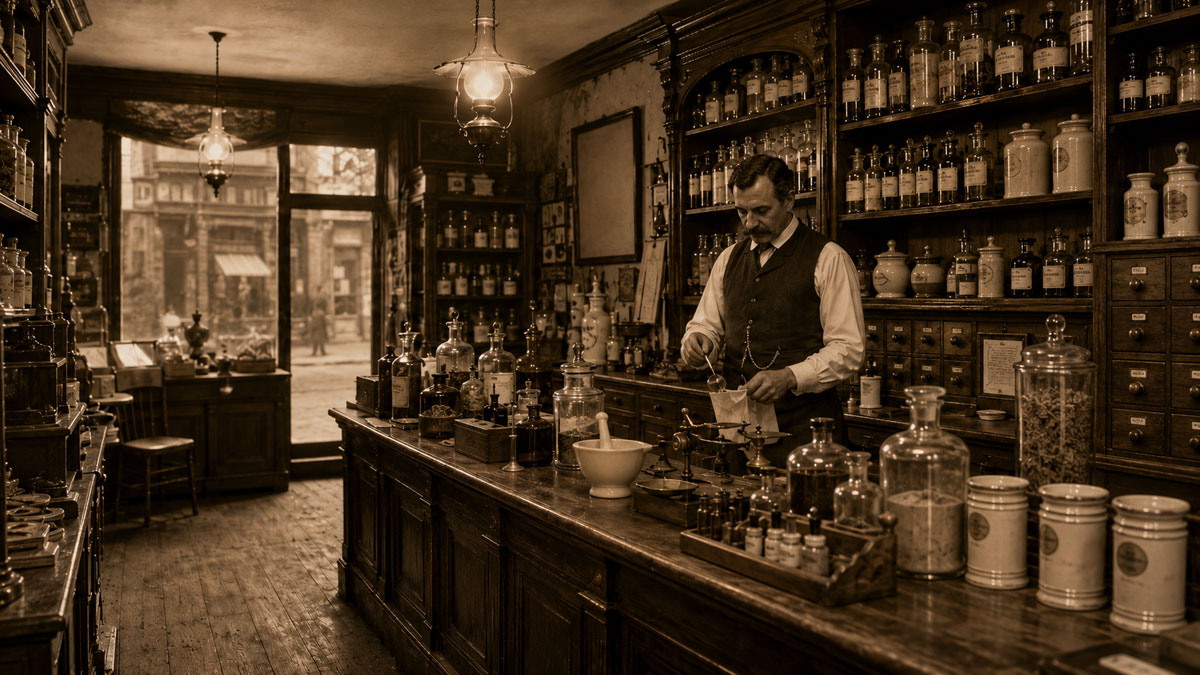
Representational image of a Victorian chemist shop
“Expert testimony”
In the meantime, William Blount clearly wanted nothing to do with impending fatherhood and fled to Australia. Margaret was on her own, though she was able to enlist the support of her sister, Mary Mitchell, and a brother based in Huddersfield did supply both baby and mother with a little money. Margaret was clearly a Bradford girl, and she returned to the Bradford area with both baby William and her sister during November 1857. However, on or about 1 December 1857, baby William died in circumstances which were sufficiently suspicious for both his mother and Mary Mitchell to be detained in custody.
An inquest was held at the Brown Cow Inn in order to determine the baby’s cause of death, and it was quickly established that the infant may well have died as the result of the administration of ‘essential oil of almonds’. This kind of almond oil was extracted from bitter almonds, which contained a highly poisonous but naturally occurring chemical compound called amygdalin. The ingestion of amygdalin causes cyanide to be released into the body, and bitter almonds can yield between four and nine milligrams of hydrogen cyanide, sometimes referred to as prussic acid, per almond. At this point, the inquest was adjourned so that a local surgeon named Dr Coates and his assistant, together with Felix Rimmington, could conduct their own investigations.
Rimmington, after examining the baby’s stomach and intestines, along with Coates, confirmed that the baby had indeed died as a result of ingesting oil of almonds. Moreover, both Rimmington and Coates stated that given the amount of almond oil found in the deceased baby, the intention must have been to bring about the infant’s death. Rimmington and Coates’ expert testimony seemed quite damning and was backed up by the comments of Margaret’s sister, Mary Mitchell, who claimed that when she asked why the baby was provided with no clothes or linen, Margaret responded by saying ‘he will never need it’.
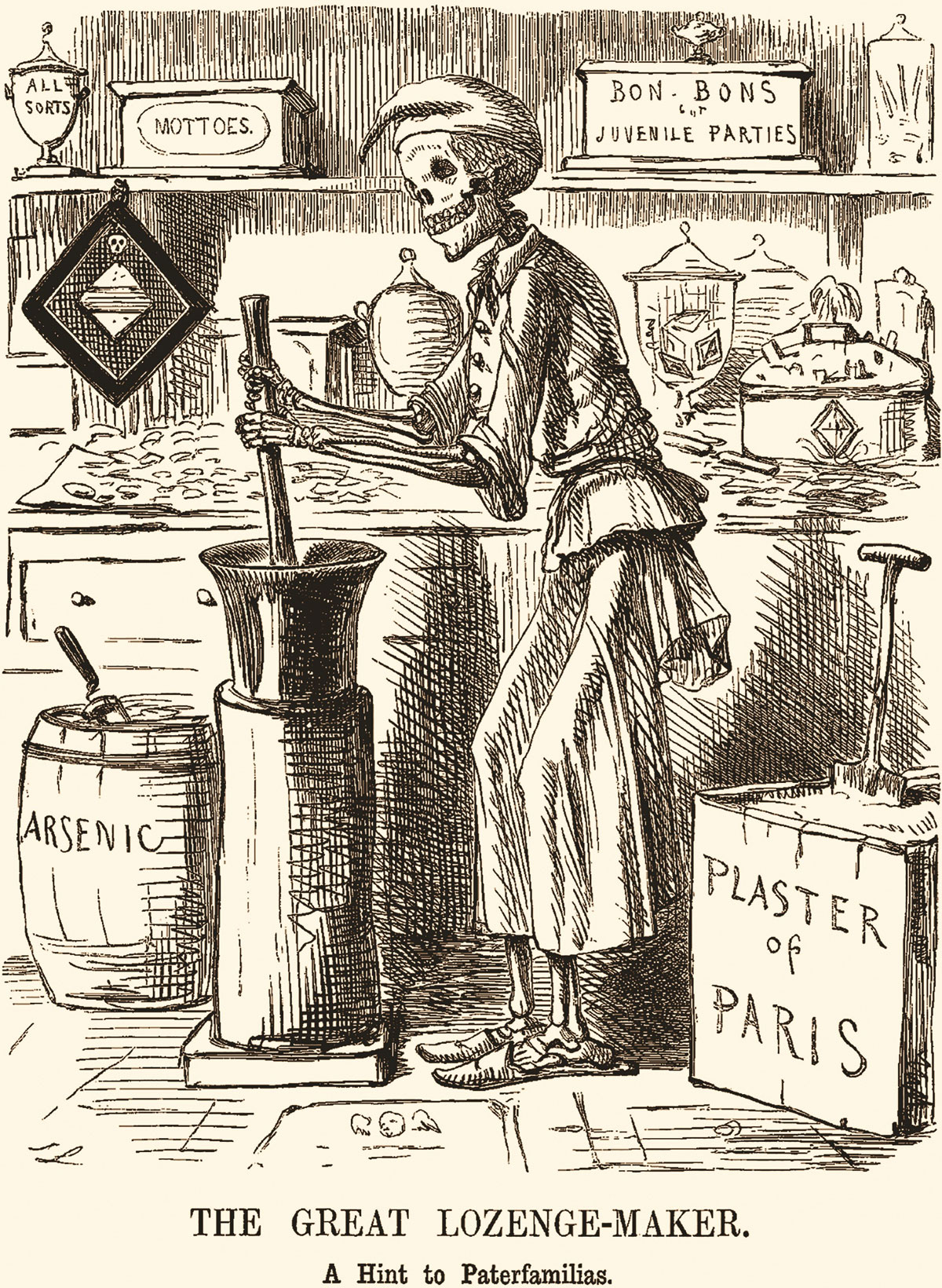
Punch magazine’s allusion to the Bradford poisonings case, 20 November 1858.
“Sinister implications”
Not surprisingly, given this evidence, the inquest jury returned a verdict that baby William had ‘died from poison administered with the intention of causing death’ – a verdict which, in the opinion of the Leeds Times newspaper of 12 December 1857, was tantamount to that of wilful murder.
Margaret Dinsey was remanded in custody to await trial at the York Assizes in spring 1858, though what became of her sister is unclear. By the time that the grand jury met to discuss what cases would be pursued in the forthcoming York Spring Assizes, Margaret Dinsey’s future seemed somewhat unsure to say the least. The gallows seemed to be beckoning. She’d already admitted to buying the bitter almond oil and administering it to her baby, but denied doing it in order to rid herself of her illegitimate child. Her sister’s comments about Margaret saying baby William had no need of linen or clothes could also be viewed as having rather sinister implications. Rimmington and Coates’ evidence also seemed to be highly damaging to Margaret’s cause. Nevertheless, when the 23 men of the grand jury met at the onset of the Assizes, under the leadership of the presiding judge, Justice Byles, the case against Margaret was thrown out. Perhaps surprisingly, Margaret didn’t even have to face a trial for murder or manslaughter, despite the expert testimony of Rimmington and Coates.
 “No real evidence”
The grand jury contained some of Yorkshire’s most prominent aristocrats and gentlemen, including the foreman of the jury, who was Edwin Lascelles, the fourth son of the 2nd Earl of Harewood. George Lascelles, Edwin’s nephew, was also on the same jury, and both men were brought up at the grand family seat at Harewood House, situated between Otley and Wetherby. Both the Lascelles men, together with the rest of the grand jury and Justice Byles, seem not to have shared the common Victorian prejudice against unmarried mothers, and fair and dispassionate treatment was meted out to Margaret Dinsey.
Essential oil of almonds could be used as a remedy for coughs, itches, and as a painkiller, and judge and grand jury seemed to think there was no real evidence that Margaret Dinsey administered the oil with any murderous intent, whatever Felix Rimmington and Dr Coates thought about the matter. Rimmington’s toxicological analysis was clearly detailed and thorough, but within the context of the late 1850s, how such evidence was interpreted was plainly open to question.
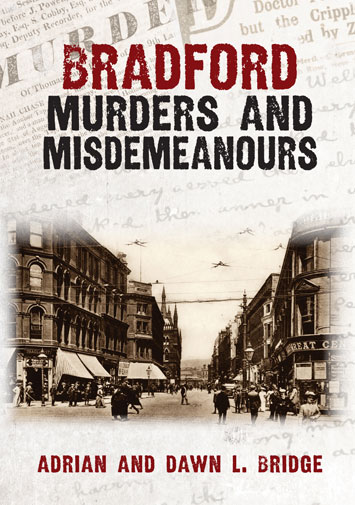
Article taken from ‘Bradford Murders and Misdemeanours’ by Adrian and Dawn L. Bridge, published by Amberley Publishing