Can You Really Tell If a Text Was Written by AI? A Deep Dive
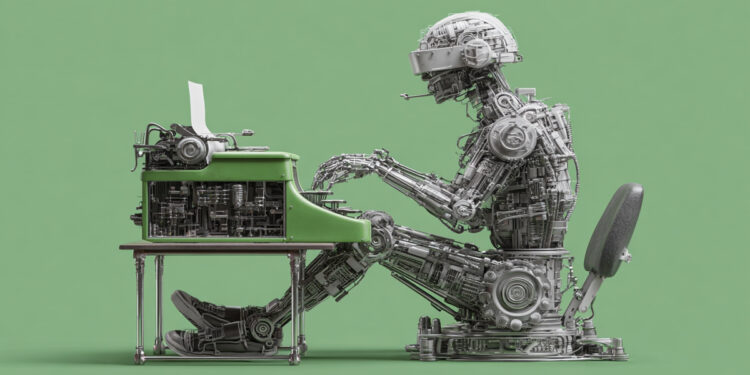
Modern language models have reshaped how words show up on screens, altering the daily routines of editors, compliance teams, and academic reviewers. A manuscript can now materialize in minutes, polished enough to pass a quick skim yet potentially synthetic from start to finish. The separation between human and machine prose continues to thin, prompting an obvious but surprisingly slippery question: can we still identify an AI-authored text with any certainty?
Why the Line Keeps Blurring
The rapid progress of large language models is only half the story. The other half lies in how people deploy them. Users have learned to introduce deliberate quirks, misspellings, abrupt tone shifts, and even filler phrases to confuse detectors. At the same time, model builders continuously refine training data, making generated sentences feel warmer, stranger, more idiosyncratic. Professionals who must detect AI-generated content online now face an evolving target that learns from every previous attempt to pin it down.
Another factor is context-aware prompting. Instead of merely asking the model to “write an article,” writers provide detailed stage directions: vary sentence length, embed personal anecdotes, sprinkle rhetorical questions. The result often fools casual readers and, increasingly, dedicated detection software.
The Vanishing “AI Tell”
For a short period, certain giveaways seemed reliable. AI tended to over-favor bland adverbs, repeat transitional phrases, and steer clear of regional idioms. Those quirks did not last. Today’s systems can imitate the detached cadence of a legal memo or the laid-back rhythm of a travel blog. Because the generator continuously references human-written examples, it has learned to borrow imperfections that once served as human fingerprints. In other words, the best models no longer sound “too clean,” they sound relatable.
How Detection Tools Work in 2025
Although no universal test has emerged, most detection suites blend several complementary techniques.
Language-Model Scoring
Virtually every detector starts by feeding the suspect passage back into a reference model. The system assesses how predictable each word is, given the words that came before it. Human prose often swings between surprising and obvious turns of phrase, whereas raw machine output historically stayed on the smooth side. But as temperature settings rise and sampling tricks multiply, that difference grows subtle, demanding additional signals.
Stylometric Fingerprinting
Stylometry measures dozens of microscopic habits: average clause length, punctuation frequency, preferred conjunctions, and so on. If you possess earlier samples from a confirmed human author, you can compare styles. The trouble is that fine-tuning a model on that very author’s work blunts the contrast. What once looked like a unique voice starts reappearing in machine-generated clones.
Watermarks and Hidden Patterns
Early watermarking schemes embedded token-level cues that diligent users could scrub by paraphrasing. The current wave focuses on semantic blocks, aiming to give text an invisible melody that stays intact even through mild edits. Adoption, however, remains voluntary, especially among open-source communities. For the moment, watermarks help in cooperative settings but are ineffective against actors who intentionally avoid them.
Recognizing the Limits
Seasoned reviewers accept that detection is probabilistic, not absolute. False alarms still appear, particularly with writers working in a second language, whose cautious structures mimic machine regularity. On the other hand, a patient opponent can guide a generator through several passes, sanding down telltale patterns until the text sounds like real human speech. Relying on a single verdict from a single tool invites either overconfidence or unwarranted suspicion.
A Brief Look at Tools in the Wild
Vendors now bundle detection with rewriting, translation, and collaboration features, pitching all-in-one environments for editorial teams. A platform often mentioned in professional circles is Smodin, known for letting users paste entire documents and receive highlighted probability bands for each sentence. During the previous exam season, the company opened its detector to students free of charge. For the backstory, you can check this article. Having detection, rewriting, and plagiarism checks under one roof streamlines workflow: an editor can flag a suspect passage, rewrite it, and verify originality without hopping between apps.
Smodin positions its detector as “high accuracy,” but seasoned users still treat results as advisory. The prevailing wisdom is simple: treat any tool, Smodin or otherwise, as a flashlight rather than a judge’s gavel.
Integrating Verification Workflows
Detection becomes most effective when folded into a clear editorial pathway rather than parked at the end of production. An initial screening can catch glaring infractions before manuscripts travel deeper into the queue. After the first sweep, human editors review flagged passages, checking for sudden tone shifts, odd metaphors, or references that appear invented. Bringing the author into the loop is essential; draft histories from shared documents often clarify whether AI played a part and to what extent.
Once the conversation concludes, the team chooses the next steps:
- Require the writer to disclose AI assistance in a preface or footnote.
- Request revisions that restore an authentic voice.
- Escalate to an ethics or compliance board if factual integrity appears compromised.
Closing every case with a short memo ensures transparency. When future questions arise, say a regulatory audit, your organization can show a chain of reasoning rather than a set of unexplained scores.
What You Can Do Right Now
Good intentions alone will not protect a brand or institution. Practical habits matter, and they begin long before a final PDF sees daylight. Start by mapping the points in your editorial pipeline where AI could appear: initial drafting, headline brainstorming, executive summaries, or localized translations. With that map in hand, choose tools that match each stage rather than relying on an all-purpose scan at the end.
A balanced toolkit includes at least two detectors that approach the puzzle differently, a version-controlled writing environment to capture draft evolution, and a short disclosure template authors can fill out without embarrassment. Keep the paperwork light, or it will be ignored; keep the purpose transparent, and contributors will recognize that the goal is credibility, not surveillance.
After deploying these measures, circle back and evaluate. Are false alarms dropping? Are genuine incidents caught early? Iterate, refine, and above all, communicate. Authenticity is a shared responsibility, and the more openly processes are discussed, the less confrontational they feel.
No blinking red light can unfailingly separate human sentences from synthetic ones. Language is too fluid, and creativity, whether biological or silicon-based, continues to borrow from the same cultural well.