Installing an EGR Delete: Parts You Need Besides the Kit
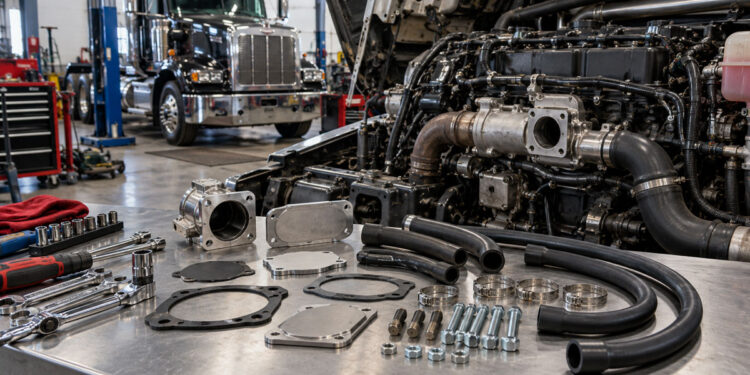
An EGR delete kit may contain the main parts for removing or blocking the exhaust gas recirculation system. However, you need to ensure that the kit includes everything needed for the complete job. Missing a small gasket, clamp, or coolant fitting can stop the work halfway through.
Thus, in this guide, we will cover the common items that may be needed for a dedicated competition vehicle.
Confirm the Vehicle and Engine Details
Do not order parts based only on the truck model or year. The same vehicle may have different engines, EGR layouts, coolers, and pipe connections.
Check the following information:
- model year;
- engine code;
- engine serial number;
- emissions family;
- current engine configuration;
- production date;
- kit part number.
Compare this information with the kit manufacturer’s fitment list. If the truck has had previous engine work, also check whether any original parts were changed.
A few minutes spent confirming fitment can prevent hours of extra work.
Check Whether the Modification Is Allowed
Removing or disabling an EGR system can violate emissions laws. In the United States, the Clean Air Act generally prohibits tampering with required emissions equipment. These rules apply to road vehicles and many kinds of nonroad equipment.
A part marked “off-road” or “competition use” is not automatically legal for every vehicle. EPA guidance also explains that an emissions-certified road vehicle does not simply become exempt because an owner plans to use it for competition.
Before buying parts, confirm the current federal, state, and local requirements. A vehicle originally built only for racing may be treated differently, but you still need to check the exact rules.
Gaskets and Seals
Gaskets are among the most commonly forgotten parts.
Old gaskets may look reusable, but heat and pressure can make them hard or uneven. Reusing them increases the chance of exhaust or coolant leaks.
Depending on the engine and kit, you may need:
- exhaust flange gaskets;
- intake gaskets;
- O-rings;
- coolant-pipe seals;
- sealing washers;
- approved thread sealant.
Use seals made for the correct temperature and fluid. Ordinary rubber seals may fail when exposed to hot coolant, oil, or exhaust gas.
Flanges, Plates, and Connection Parts
Some engines require extra connection pieces to complete the new layout. These parts may include block-off plates, adapter plates, intermediate flanges, coolant plugs, or pipe connectors.
For example, a component such as the “FUGLY” Intermediate Flange for EGR Delete may be one part of a larger competition-use configuration. Confirm fitment for the exact engine before installation.
The flange surfaces should be flat and clean. A damaged or uneven surface may leak even when a new gasket is installed.
Never force a part into position. If the bolt holes or pipe connections do not line up correctly, stop and check the part number and engine configuration.
Replacement Hardware
Bolts and nuts exposed to exhaust heat often become rusty or weak. Some may break during removal.
It is helpful to have the correct replacement hardware ready, including:
- high-temperature bolts;
- locking nuts;
- washers;
- studs;
- pipe clamps;
- hose clamps;
- support brackets.
Use the bolt grade and size listed in the service information. A bolt that looks similar may have the wrong strength or thread.
Some fasteners are designed for one-time use. Replace them instead of installing them again.
Coolant and Hoses
Removing an EGR cooler usually opens part of the cooling system. You may need fresh coolant, hose connections, clamps, plugs, or replacement hoses.
Use the coolant type recommended by the engine manufacturer. Mixing different coolant types can reduce protection against corrosion and may create deposits.
Inspect the nearby hoses while access is open. Replace any hose that feels very hard, soft, swollen, or cracked. It is easier to change a worn hose during the main job than to take the vehicle apart again later.
Plan how you will collect and store the old coolant. Coolant is toxic and should never be poured onto the ground or into a drain.
Tools to Prepare
The exact tools depend on the engine, but a normal checklist usually includes:
- socket and wrench sets;
- torque wrench;
- hose-clamp pliers;
- line wrenches;
- screwdrivers and picks;
- drain container;
- cleaning brushes;
- plastic scraper;
- inspection light;
- safety glasses and gloves.
Penetrating oil can help with rusty exhaust fasteners. Apply it in advance when possible.
You may also need extra space to store removed parts in order. Label bolts, hoses, and electrical connectors so they do not become mixed up.
Cleaning and Inspection Supplies
Gasket surfaces must be clean before new parts are fitted. Have clean cloths, a suitable degreaser, and a plastic gasket scraper ready.
Avoid pushing dirt into open intake, exhaust, or coolant passages. Cover every opening as soon as a pipe or component is removed.
Inspect the surrounding area for soot, damaged wiring, cracked hoses, and signs of coolant leakage. If another fault is present, deal with it before putting everything back together.
An EGR modification will not repair a damaged head gasket, faulty turbocharger, blocked filter, or weak cooling system.
Software and Electrical Concerns
Modern diesel engines monitor EGR flow, temperature, valve position, and other emissions functions.
Changing the hardware without an approved, lawful engine-management plan may trigger warning lights, fault codes, reduced power, or limp mode. Incorrect programming can also create poor engine operation or damage.
Final Checks Before Starting
Read the complete instructions before removing the first part. Confirm that you have all seals, hardware, coolant, tools, and safety equipment.
You should also have the correct torque specifications and a plan for handling removed coolant and emissions components.
Most importantly, make sure the modification suits the vehicle’s actual use. For a road-driven truck, repairing the original EGR system is usually the safer, compliant choice.
Careful preparation can prevent delays, but it cannot correct poor fitment, an incomplete diagnosis, or an unlawful modification.