Adult Braces vs Invisalign: Which Discreet Treatment Fits Your Professional Lifestyle?
In the modern corporate world, first impressions are forged in seconds. Whether you are leading a high-stakes boardroom pitch, presenting on a video conference, or networking at an industry summit, a confident smile is a powerful professional asset.
Historically, many adults who missed out on orthodontic treatment during their youth accepted crooked or misaligned teeth simply to avoid the aesthetic drawback of traditional “train-track” metal braces. The prospect of standing before a team of colleagues with highly visible metal brackets and wires felt incompatible with a polished, corporate image.
Fortunately, modern digital dentistry has completely changed the landscape. Today, professional adults seeking orthodontic correction have access to highly advanced, subtle systems that straighten teeth efficiently without compromising their professional appearance.
The two most popular choices dominating the UK market are modern adult cosmetic braces (such as clear or lingual fixed appliances) and Invisalign clear aligners. Both treatments offer excellent clinical results, but they operate very differently in day-to-day life.
This comprehensive guide breaks down the practical pros, cons, lifestyle impacts, and financial investments of both options to help you choose the discreet orthodontic pathway from Avenue Dental Practice that perfectly aligns with your professional routine.
The Core Contenders: Understanding Your Subtle Options
Before comparing how these treatments fit into a busy working week, it is essential to understand what these modern systems actually are.
1. Clear Aligner Systems (Invisalign)
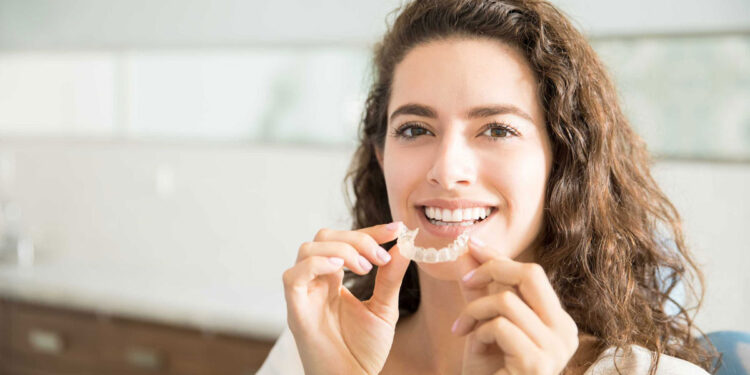
Invisalign does away with brackets and wires entirely. Instead, it utilises a sequential series of custom-moulded, medical-grade thermoplastic trays that sit directly over your teeth. Each set of aligners is worn for roughly one to two weeks, gently moving your teeth by a fraction of a millimetre at a time before you move on to the next tray in the series. They are entirely removable, meaning you take them out to eat, drink, brush, and floss.
2. Discreet Fixed Adult Braces
Adult cosmetic braces are permanent fixtures attached to your teeth for the duration of your treatment, but they are designed to be as inconspicuous as possible. They generally fall into two categories:
- Clear Ceramic Braces: These use the same mechanical principles as traditional metal braces, but the brackets are crafted from translucent ceramic materials that blend perfectly with your natural enamel colour, paired with tooth-colored wires.
- Lingual Braces: These are completely hidden custom-metal braces that are bonded to the back (lingual side) of your teeth facing your tongue, making them entirely invisible from the front.
Invisalign in Public:
Invisalign is remarkably close to invisible. Unless someone stands inches from your face or you explicitly point them out, colleagues and clients will not notice you are wearing them. However, depending on your treatment plan, your dentist may need to apply small, tooth-colored composite bumps called “attachments” to your teeth to give the plastic trays leverage. While still incredibly subtle, these attachments can make the trays slightly more catching to the eye in bright lighting.
Cosmetic Braces in Public:
Clear ceramic braces are exceptionally discreet compared to metal versions, but the ultra-thin archwire running across your teeth remains visible upon close inspection. Lingual braces win the pure aesthetic battle hands down, as they are completely concealed behind your teeth. No one will ever know you are undergoing orthodontic treatment, even when you laugh or give a wide smile during a presentation.
Daily Practicality: Client Dinners and Business Travel
Your orthodontic appliance needs to fit around your working day, not the other way around. Managing a treatment routine during client lunches, continental business travel, and long office hours requires a clear understanding of daily maintenance.
The Invisalign Lifestyle: The “22-Hour” Commitment
The greatest strength of clear aligners, their removability, is also their greatest logistical challenge for busy professionals. To achieve your target results within the projected timeline, you must wear your aligners for 22 hours per day.
- The Coffee Dilemma: You cannot drink hot liquids, coffee, tea, or red wine while wearing aligners, as the heat can warp the plastic and dark liquids will stain the clear trays. If you rely on multiple cups of coffee to power through a morning strategy session, you must remove your trays, drink your coffee, brush your teeth, and pop the trays back in.
- Client Entertaining: Dining out with clients requires a quick trip to the cloakroom beforehand to discreetly pop your aligners into their protective case. After the meal, you cannot simply head back to the office; you must brush your teeth thoroughly before reinserting the trays to avoid trapping sugar and bacteria against your enamel, which can lead to tooth decay.
The Fixed Braces Lifestyle: Fit and Forget
Fixed cosmetic or lingual braces offer a distinct lifestyle advantage for unpredictable, fast-paced professions: they require zero compliance. Once fitted by your clinical team, they work continuously 24 hours a day without any intervention from you.
- No Mid-Meal Trips: You can sit through a three-course corporate dinner, toast a successful deal with a glass of wine, and drink coffee throughout long meetings without ever worrying about storage cases or countdown clocks.
- Dietary Restrictions: The trade-off is that you must modify what you eat. Crunchy working lunches like hard baguettes, apples, nuts, or tough meats can break ceramic brackets or dislodge wires, leading to unexpected emergency appointments. Furthermore, food can easily become trapped in fixed appliances, meaning a post-meal mirror check or interdental brush is vital before stepping into a meeting.
Speech and Communication
If your career relies heavily on your voice, such as lecturing, legal advocacy, or sales consultancy, any appliance that alters your articulation can cause professional anxiety.
- Invisalign: Most patients experience a very mild lisp for the first 48 to 72 hours as the tongue adjusts to the thin layer of plastic over the biting surfaces of the teeth. This wears off quickly as your muscle memory adapts.
- Ceramic Fixed Braces: Because these sit on the outer surface of your teeth, they have virtually zero impact on your speech patterns from day one.
- Lingual Braces: Because they occupy the space directly behind your teeth where your tongue strikes to form specific phonetic sounds (like “S” and “T”), lingual braces can cause a noticeable speech impediment that takes several weeks to resolve. For high-profile public speakers, this adjustment phase requires careful timing.
The Treatment Timeline and Clinical Predictability
In business, project timelines matter. The same applies to your orthodontic journey.
| Feature Comparison | Invisalign Clear Aligners | Fixed Cosmetic Braces |
| Average Treatment Duration | 6 to 18 months | 6 to 24 months |
| Removable? | Yes (Essential for eating/cleaning) | No (Fixed for duration) |
| Dietary Restrictions | None (Remove to eat anything) | Avoid hard, sticky, or chewy foods |
| Appointment Frequency | Every 4 to 8 weeks | Every 4 to 6 weeks |
| Main Clinical Focus | Mild to complex alignment & spacing | Minor cosmetic tweaks to severe bite fixes |
With clear aligners, your entire treatment is mapped out from day one using advanced digital scanning software. This allows you to see a 3D digital simulation of your final smile before the trays are even manufactured. Because you receive several sets of aligners at once, appointment frequencies are highly manageable, often just a quick check-in every six to eight weeks to ensure things are tracking smoothly, which is ideal for professionals who travel frequently.
Fixed braces require regular, manual adjustments by your dentist or orthodontist to alter the tension of the wires. While this means slightly more frequent visits to the clinic, fixed braces give the clinician absolute, minute control over tooth root movements, which can sometimes make them faster at resolving highly complex structural bite issues.
Making the Local Choice: Convenience for Busy Professionals
When you are juggling a demanding career, the success of your orthodontic treatment often hinges on the convenience of your dental practice. Choosing an accessible, experienced clinic saves you from losing valuable working hours to long commutes.
For professionals living or working in Warwickshire, selecting a practice that offers advanced digital tracking and comprehensive cosmetic consultations locally is a game-changer. Utilising an established provider for your Invisalign in Leamington Spa allows you to schedule your scanning, fitting, and monitoring check-ins around your corporate calendar seamlessly, ensuring your treatment moves forward smoothly without disruptive cross-country travel.
Investment and Long-Term Value
Both adult fixed braces and clear aligners represent a significant financial investment in your personal branding, health, and self-confidence.
Generally, the cost of advanced clear aligners and high-quality clear fixed braces sits within a comparable price range across the UK, typically varying based on the complexity of your case and whether you require single-arch or dual-arch treatment. Lingual braces usually command a premium price point due to the bespoke laboratory fabrication of the hidden gold or metal brackets and the specialised clinical training required to adjust them.
Most modern dental practices offer flexible, interest-free payment plans over 12 to 24 months. This allows working professionals to fund their smile transformation efficiently out of their monthly cash flow rather than upfront capital.
Conclusion: Which Fits Your Lifestyle Best?
Ultimately, there is no single “correct” option; the best choice depends entirely on how you work and live.
- Choose Invisalign if: You value pristine aesthetics on camera, want the freedom to eat whatever you like at corporate dinners, possess the daily discipline to hit the 22-hour wear target, and want to visualise your end result via digital scans before starting.
- Choose Fixed Cosmetic Braces if: You have an unpredictable schedule, travel constantly across time zones, do not want the stress of tracking daily wear hours or removing trays during client events, and require a system that works completely in the background without user compliance.
Consulting with a qualified local professional will help you assess your clinical needs alongside your career demands, setting you firmly on the path toward a healthier, more commanding professional smile.
FAQ: Common Adult Orthodontic Questions
Will wearing Invisalign affect my ability to give professional presentations?
For the vast majority of people, the answer is no. While you might notice a very slight lisp for the first day or two as your tongue adjusts to the aligners, this changes quickly. Within a few days, your speech returns to normal, allowing you to present clearly and confidently.
Can I drink clear liquids like sparkling water or gin and tonics with Invisalign in?
Plain, ambient-temperature sparkling water is perfectly fine. However, you should avoid drinking alcoholic beverages, mixers, sugary sodas, or flavoured waters with your trays in. Sugars and acidic liquids can easily pool inside the aligners, holding them directly against your teeth for hours, which drastically increases your risk of enamel erosion and tooth decay.
How do I clean my teeth after eating a working lunch if I have fixed ceramic braces?
It is highly recommended to keep a small travel pouch in your office drawer containing a compact toothbrush, fluoride toothpaste, and interdental brushes. After eating, a quick two-minute clean in the office washroom ensures that no stray food particles are trapped in your brackets before you head into your next meeting.