How to Design a Kitchen for Busy Family Mornings
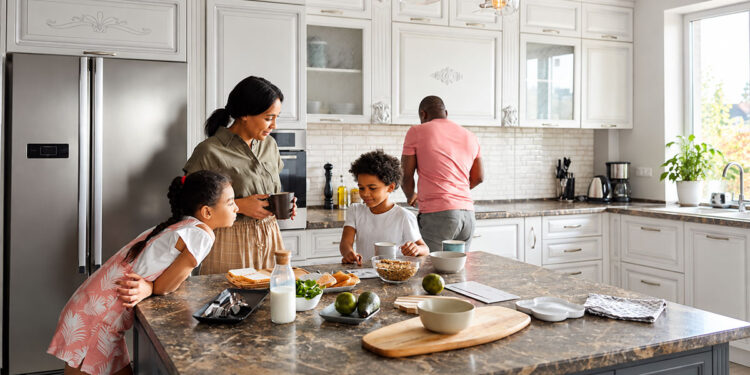
Family mornings can put more pressure on a kitchen than almost any other part of the day. Breakfast is being made, packed lunches are coming together, school bags are appearing on chairs and different people may be leaving the house at completely different times.
When several routines overlap in one room, even a spacious kitchen can start to feel cramped. Someone making coffee may be standing in front of the cupboard another person needs, while an open dishwasher, fridge door or breakfast stool suddenly blocks the main route through the room.
A family-friendly kitchen does not necessarily need to be bigger. It needs to make everyday jobs easier to complete at the same time. Thinking about where people stand, what they reach for and how they move through the room can make mornings feel considerably less chaotic. Material choices matter too: wood worktops can add warmth and visible texture without changing how practical the room needs to be.
Create a Dedicated Breakfast Zone
One of the simplest ways to reduce morning traffic is to group breakfast essentials together.
Instead of keeping mugs in one cupboard, cereal somewhere else and the toaster at the opposite end of the kitchen, create a compact area where most of the things needed first thing in the morning are within easy reach.
Tea, coffee, bowls, cereal, bread and everyday cups could all sit within the same section of cabinetry. If children are old enough to prepare parts of their own breakfast safely, a low drawer for bowls, cups or cereal can also give them some independence without sending them through the busiest part of the kitchen.
The aim is not to create an elaborate coffee station. It is simply to reduce the number of times people need to cross the room while everyone else is trying to do the same thing. If the breakfast zone also includes seating, a deeper breakfast bar worktop can create space for plates and drinks without spreading them across the main preparation area.
Keep Everyday Items Within Easy Reach
The easiest cupboards and drawers should generally be reserved for the things the household uses every day.
Lunch boxes, reusable bottles, basic crockery and cutlery are more useful close at hand than baking equipment or serving dishes that may only come out occasionally. Small changes to where items are stored can remove a surprising amount of unnecessary movement from the morning routine.
It can also help to organise storage around tasks rather than traditional categories. If lunch boxes are always used with water bottles, food wraps and snack containers, keeping those things relatively close together may be more practical than storing each item in a separate part of the kitchen.
Deep drawers are particularly useful because their contents can usually be seen without moving several other items first.
Use a Breakfast Bar for Staggered Routines
Not every family sits down to breakfast at the same time.
In many households, one person may already be leaving while somebody else has only just started eating. A breakfast bar works well in this situation because it provides informal seating without requiring everyone to use the dining table at once.
It also gives somebody somewhere to eat, check a school timetable or finish a drink while another person continues preparing food nearby.
If several people are likely to use the area at once, a deeper surface can provide enough room for plates, drinks and seating while leaving the main food-preparation area relatively clear.
Bigger is not always better, however. A compact two-seat bar may be far more useful than an oversized island if it preserves an obvious route through the kitchen.
Choose Seating That Stays Out of the Way
Breakfast-bar seating should be convenient when it is being used and almost disappear when it is not.
Stools that permanently project into a walkway can turn a useful feature into another morning obstacle. Ideally, they should tuck beneath the worktop so the surrounding floor area remains clear.
It is also worth considering the space needed once somebody is actually sitting down. A stool may fit neatly beneath the counter when empty but extend much further into the room when occupied.
This becomes particularly important when seating is opposite a fridge, dishwasher or frequently used bank of drawers.
Backless stools are often easier to store, while stools with supportive backs may make more sense if the same space doubles as a homework area or occasional home-working spot later in the day.
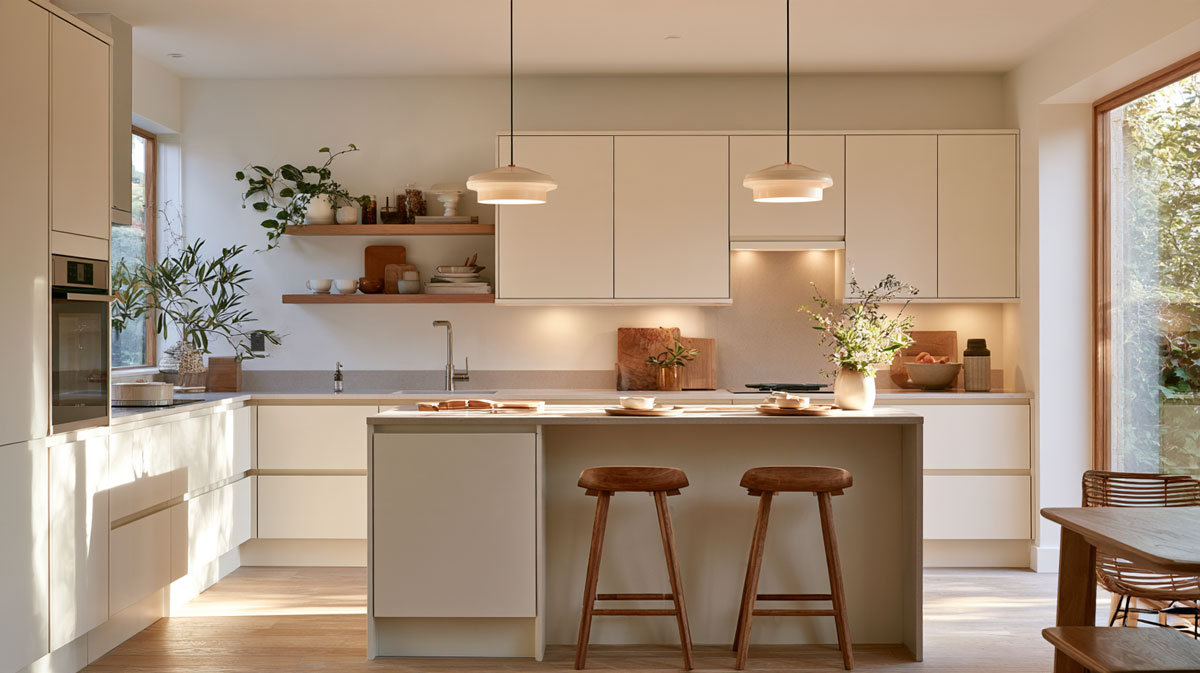
Plan Lighting for Early Starts
A kitchen lighting scheme that works perfectly on a bright weekend afternoon may be much less effective at seven o’clock on a winter morning.
One ceiling light can illuminate the room generally while leaving important work areas in shadow. Layered lighting is usually more useful.
Under-cabinet lights can brighten the sections used for preparing breakfast and packed lunches, while a pendant or smaller fitting over a breakfast bar helps define the seating area.
A softer secondary light can also be useful when one person is awake before everybody else and does not need the entire kitchen brightly illuminated.
Where possible, separate switches or dimmers allow the room to adapt as the household gradually gets moving.
Build in Charging Points and Useful Storage
Morning clutter increasingly includes more than plates and cereal boxes.
Phones, headphones, smartwatches, tablets, keys and school devices often end up in the kitchen because it is the last shared room people pass through before leaving home.
Providing a charging point near the breakfast area can keep devices away from the main food-preparation zone. A shallow drawer or small cupboard nearby can then give cables, keys and other daily essentials somewhere permanent to live.
It is usually best to keep this storage deliberately limited. One well-organised drawer is more useful than creating another large space that gradually fills with miscellaneous items nobody can find.
Choose Practical Materials That Still Feel Warm
A family kitchen has to cope with crumbs, spills, bags being placed on surfaces and repeated wiping down. Practicality matters, but that does not mean the room has to feel purely functional.
This is especially relevant in open-plan homes, where the kitchen is visible from the living or dining area throughout the day.
Natural timber can help soften a room dominated by cabinetry and appliances. Its grain and texture can introduce warmth while still keeping the kitchen practical for everyday family use.
Whatever surface is used, it should also make sense for the household’s actual routine. Areas around the kettle, sink and lunch-preparation zone need to be easy to clean, while the finish should suit the level of maintenance the family is realistically willing to carry out.
Make the Space Useful Beyond Breakfast
Features designed to improve the morning routine should still be earning their place at lunchtime and in the evening.
A breakfast bar might become somewhere children do homework, a spot for an informal evening meal or a convenient place to sit with a laptop. Good storage remains useful long after everyone has left for work or school, while effective lighting makes the same area adaptable throughout the day.
This matters particularly in flats, smaller houses and open-plan extensions, where there may not be enough room for features that only perform one job.
A kitchen becomes more valuable when the same space can change function without needing to be rearranged constantly.
Design Around the Busiest Part of the Day
Before committing to a kitchen layout, imagine the busiest twenty minutes of a normal weekday morning.
Where does somebody stand to make coffee? Can another person reach the fridge at the same time? Can a drawer still open if somebody is sitting at the breakfast bar? Is there somewhere to put a school bag without dropping it directly into the main walkway?
These questions can reveal issues that are difficult to spot on a floor plan. A route that appears generous when the room is empty may feel very different once a dishwasher door is open, a stool is occupied and several people are trying to prepare food at once.
Designing around those real routines is often more useful than focusing on how the kitchen looks when everything is perfectly tidy. If the room works well during the most demanding part of the day, it is likely to feel easier to use the rest of the time too.