A Short History of the Independent Bookie: Yorkshire’s Legacy of Local Odds
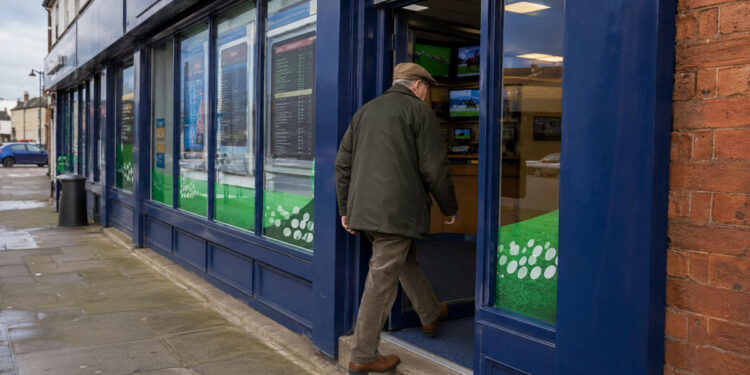
Yorkshire’s relationship with betting is older than the bookmaker as a profession. It is older than the high street shop, older than the printed racecard, and – in the case of Doncaster – older than most of the laws that eventually tried to regulate it. To understand the independent bookie in this part of England is to understand something essential about how the county has always conducted its leisure: with directness, with loyalty to the local, and with a deep and genuinely felt connection to the land and the horses that run across it.
Racing Roots: Why Yorkshire Produced Britain’s Betting Culture
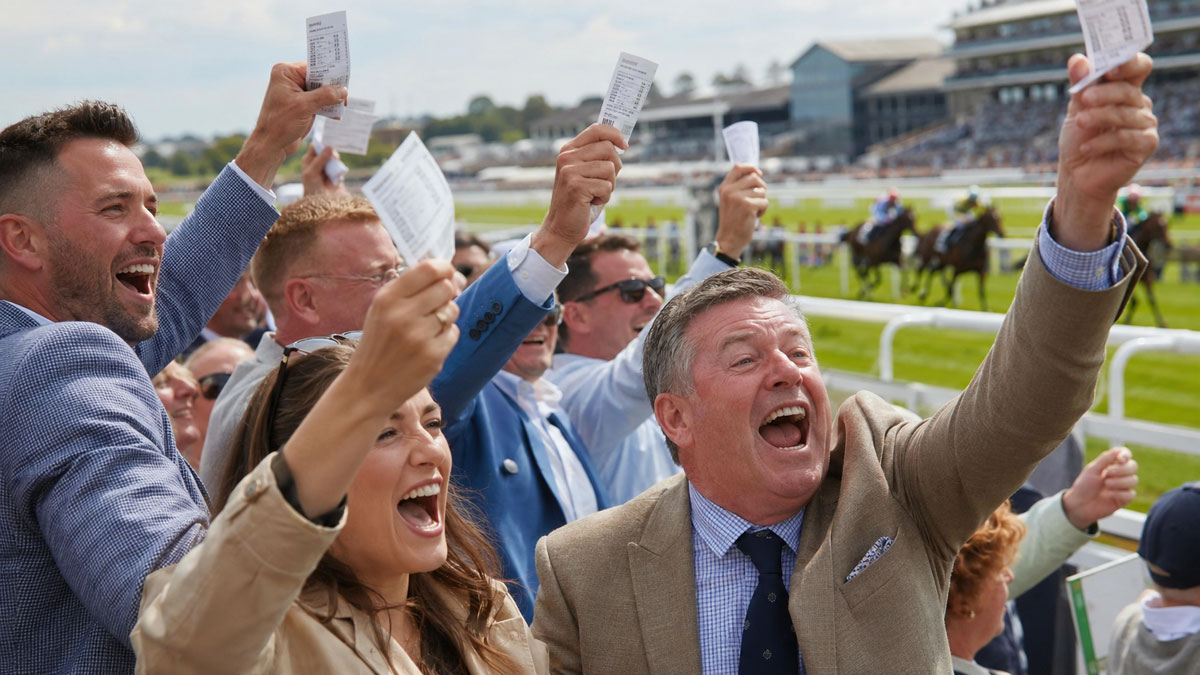
Yorkshire’s nine racecourses – York, Doncaster, Pontefract, Beverley, Ripon, Thirsk, Catterick, Wetherby, and Redcar – form the densest concentration of professional racing venues in Britain, and that density created the conditions in which a distinct, regional betting culture took root and flourished for centuries before a single licensed shop existed.
Doncaster’s Town Moor staged racing as early as 1595, when the course first appeared on a local map. The St Leger, first run in 1776, became the oldest Classic race in the world and drew the aristocracy of England north in significant numbers each September. By the 1820s, a typical St Leger meeting attracted coaches with liveried footmen and a crowd that filled hundreds of lodging houses at 15 to 20 guineas apiece. Racing at Pontefract dates to 1648, making it one of England’s oldest continuously operating venues. Wetherby and Catterick extend the county’s racing footprint north and west, while Beverley Westwood has hosted meetings since at least 1690.
This geography matters. The northern racing circuit – York, Doncaster, Pontefract, and eventually Newmarket – was, for most of its history, a largely self-contained world. Yorkshire owners and breeders competed primarily against each other, with horses travelling between fixtures on unpaved roads. Local knowledge of form, bloodline, and ground conditions became a genuine competitive advantage for those willing to cultivate it. The independent bookie was the custodian of that knowledge in this environment.
Street Bookies, Runners, and the Underground Trade
Formal off-course betting was illegal in Britain from the 1850s through to 1961, but in Yorkshire’s mining and mill towns, that legal status had little practical effect. By the early twentieth century, illegal street bookmaking was one of the most organised informal economies in the country. Bookies’ runners – often young men known to their entire street by name – collected slips and stakes from factory floors, pub corners, and terrace doorsteps, returning winnings with a reliability that made the constable’s occasional intervention an inconvenience rather than a deterrent.
At Pontefract racecourse, the cultural ties between the track and the surrounding working community were encoded in the fixture schedule itself. Race meetings began at 2.45 pm – substantially later than those at other courses – specifically so that miners finishing the morning shift at the nearby colliery could attend. The bookie who served those same miners on a Tuesday morning was not operating outside his community. He was an integral part of it.
This is the foundational character of the Yorkshire independent bookie: embedded, trusted, and operating on reputation rather than branding.
The 1960 Act and the Birth of the High Street Bookie
The Betting and Gaming Act 1960 changed everything. When the first licensed betting shops opened on 1st May 1961, independent operators across Yorkshire – men who had been taking bets illegally for decades – became legitimate businesspeople overnight. Within six months of the Act coming into force, 10,000 betting shops had opened across Britain, with new premises appearing at a rate of 100 every week.
Yorkshire’s independent bookmakers moved quickly. The infrastructure already existed: the customer relationships, the settlement processes, the local knowledge of punter preferences. What changed was the removal of the permanent threat of prosecution. Former street bookies formalised their operations, took on premises, and built shops that, while legally required to black out their windows and ban clocks, became social anchors in working-class communities from Leeds to Hull, Harrogate to Huddersfield.
The regulated betting shop served functions that extended well beyond the placing of a wager. Retired men spent afternoons discussing form. Staff knew customers by name and understood their preferences across sports, stakes, and systems. A regulars’ shop in a South Yorkshire pit town in 1968 operated, culturally, as a second sitting room – somewhere between the pub and the corner shop in its role within daily life.
The Consolidation Era and the Fight for Survival
The independent bookie’s golden era was not to last unchallenged. Through the 1970s and 1980s, Ladbrokes and William Hill pursued aggressive acquisition strategies, absorbing dozens of smaller regional operators and consolidating the high street under national brands. Coral, equally acquisitive during this period, absorbed smaller chains including Reg Boyle, John Joyce, and Chas Kendall – names that had operated across the north of England for a generation.
By the late 1980s, the number of UK betting shops had declined from a peak of over 16,000 to closer to 10,000, with independent operators bearing the disproportionate weight of that contraction. The cost pressure was structural: national chains could negotiate better margins with suppliers, pool regulatory compliance costs across hundreds of sites, and absorb the impact of losing weeks through brand strength alone. An independent in Rotherham or Harrogate had none of those advantages.
The ones who survived did so through the same mechanism that had always sustained them: local loyalty. A punter who had backed horses with the same family-run shop for twenty years did not necessarily welcome a William Hill fascia on the door. Some switched. Many did not.
The Digital Turn and the Independent Bookmaker Today
The internet changed the competitive landscape in ways that the big chains initially navigated better than their independent counterparts. Online betting – scaling nationally from around 2000 – removed the geographic advantage that had always protected the local bookie. A punter in Bradford no longer needed to walk to a shop when a national operator’s website loaded in seconds.
Yet the digital era has also created genuine opportunities for the independent operators who adapted to it. The consolidation of the major brands into three or four global gambling conglomerates – Flutter, Entain, and their peers – has created a market appetite for something different. Punters who resent the account restrictions routinely applied by the major operators, and who want to bet without a sophisticated liability algorithm reviewing their activity, actively seek out operators with a different philosophy.
This is the context in which new independent bookmakers have carved out a renewed relevance. Small-scale, often owner-operated, and willing to accept winning customers that the largest platforms increasingly refuse, these operators carry the same competitive identity that Yorkshire’s street bookies embodied a century ago: local in character, transparent in practice, and built on the proposition that a fair price, offered without conditions, is its own selling point.
What the Independent Bookie Represents
The independent bookmaker is not simply a smaller version of Ladbrokes. It is a structurally different proposition – one built on personal accountability rather than shareholder return, on community knowledge rather than algorithmic pricing, and on the kind of relationship-based trust that a brand operating 2,000 shops cannot replicate at the counter level.
Yorkshire’s racing heritage gave birth to this model. The St Leger crowd of the 1820s, the Pontefract miners of the 1950s, the terraced-street punter folding a slip into a runner’s hand in 1938 – all of them were participants in a local economy of odds that was never truly about the money alone. It was about knowing who you were dealing with, and knowing they knew you back.
That instinct has not disappeared. It has migrated from the blacked-out window of a 1961 shop into the independent digital operator of 2025, carrying the same essential character across six decades of legislation, consolidation, and technological disruption. The local bookie endures because the appetite for fair dealing at a human scale has never, in Yorkshire or anywhere else, gone away.