Red Light Therapy: What the Science Actually Says and Why More People Are Trying It at Home
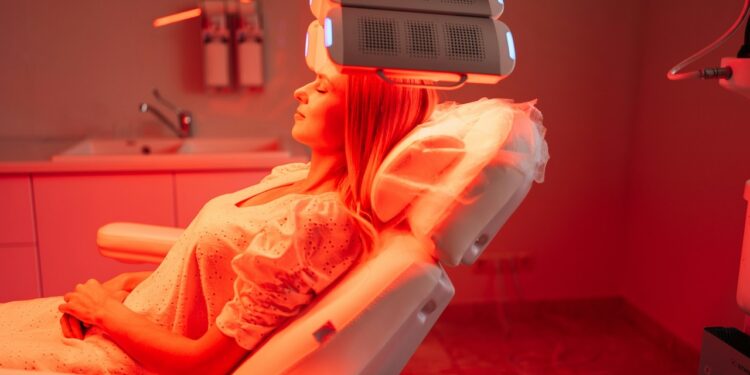
Red light therapy has moved steadily from clinical and sports medicine settings into mainstream wellness over the past decade. Once found primarily in dermatology clinics, physiotherapy practices and high-performance sports facilities, the technology is now available for home use across much of the world, and consumer interest has grown considerably. Understanding what the science actually supports, where the evidence is stronger and where it remains preliminary, is a useful starting point for anyone considering exploring the technology.
What Red Light Therapy Is
Red light therapy, also referred to as photobiomodulation or low-level light therapy, involves exposing the body to specific wavelengths of red and near-infrared light, typically in the range of 630 to 850 nanometres. These wavelengths are thought to penetrate the skin and be absorbed by photoreceptors within the mitochondria, the energy-producing structures inside cells.
The proposed primary mechanism centres on cytochrome c oxidase, a protein in the mitochondrial membrane. Research suggests this protein may respond to near-infrared photons by influencing the production of adenosine triphosphate, the molecule that powers cellular function, as well as modulating oxidative stress and reactive oxygen species within the cell. The downstream effects of these cellular changes are what researchers have examined across a range of clinical applications.
The science of photobiomodulation has been studied since the 1960s, when Endre Mester at Semmelweis University in Budapest observed that low-powered laser light appeared to stimulate hair growth and wound healing in mice. Since then, the field has expanded considerably, with thousands of peer-reviewed studies published across a wide range of proposed applications. The quality and consistency of that evidence varies significantly depending on the specific application and the methodology of individual studies.
Skin Health: The Most Developed Evidence Base
The application where red light therapy has attracted the most rigorous and consistent scientific attention is skin health. Multiple peer-reviewed studies have examined its effects on parameters including collagen density, skin texture, fine lines and wound healing, with broadly positive findings in well-controlled trial settings.
A randomised, double-blind, placebo-controlled trial published in Photomedicine and Laser Surgery in 2014 investigated the effects of combined red and near-infrared light on facial skin in 136 volunteers. The study found statistically significant improvements in skin complexion, skin tone and collagen density in the treatment group compared to the control group, with no serious adverse effects reported. The authors concluded the treatment appeared to be a safe and effective approach to skin rejuvenation, while noting that further research would help to clarify optimal treatment protocols.
A separate 2013 study published in the same journal examined the effects of red and near-infrared light on facial wrinkles and skin roughness in a randomised controlled design. Participants in the treatment group showed significant improvements in skin texture and wrinkle reduction compared to controls, with the researchers suggesting the findings supported the use of LED phototherapy as a non-invasive option for photoageing. The authors acknowledged that longer-term follow-up would be needed to assess the durability of results.
The proposed mechanism for these findings is the stimulation of fibroblast activity in the dermis, increasing the production of collagen and elastin. A 2003 study in the Journal of Photochemistry and Photobiology provided early evidence of this, demonstrating that near-infrared light could stimulate collagen synthesis in human fibroblast cultures. This cellular mechanism is consistent with the clinical findings observed in skin treatment studies, though researchers note that translating in vitro findings to clinical outcomes involves additional complexity.
Wound Healing: An Established Research Area
Wound healing is one of the longer-established applications for photobiomodulation, with research dating back several decades. A systematic review published in Laser Therapy in 2012examined the available evidence for low-level laser therapy in wound healing and found broadly supportive findings across multiple studies, with improvements in wound closure rates and tissue regeneration observed in both animal and human studies.
A 2009 randomised controlled trial published in the Journal of Clinical Periodontology examined the effects of low-level laser therapy on oral wound healing following surgery and found significantly accelerated healing in the treatment group compared to controls. Researchers in this area generally emphasise that results vary depending on the device used, the wavelength and irradiance applied, and the nature of the wound or injury being treated.
Muscle Recovery: A Growing Body of Evidence
Interest in red light therapy for muscle recovery has grown substantially among athletes, physically active individuals and sports medicine practitioners. A 2016 study published in Lasers in Medical Science examined the effects of pre-exercise red light therapy on muscle performance and post-exercise soreness in a randomised controlled design. The study found that participants who received red light treatment before exercise showed reduced muscle fatigue and lower levels of post-exercise soreness compared to the control group. The researchers suggested the findings supported the use of photobiomodulation as a pre-exercise intervention, while noting that further research was needed to confirm optimal treatment parameters.
A systematic review and meta-analysis published in BJSM in 2010 examined the existing evidence for low-level laser therapy in musculoskeletal pain and found significant reductions in pain compared to sham treatment across multiple included studies. Many individual studies in the muscle recovery area are relatively small in scale and findings have not been entirely consistent across all research groups, so the evidence is best understood as promising and continuing to develop rather than definitive.
Joint Health and Inflammation: Early but Consistent Findings
Researchers have also examined the effects of near-infrared light on joint health and inflammatory markers. A 2009 systematic review published in The Lancet examined the evidence for low-level laser therapy in neck pain and found moderate evidence for reductions in pain intensity and disability compared to sham treatment in the short term, though the reviewers noted variability in study quality.
A 2000 randomised controlled trial published in the Journal of Rheumatology examined the effects of low-level laser therapy on rheumatoid arthritis symptoms and found significant reductions in pain and morning stiffness in the treatment group compared to placebo. As with other applications, the authors emphasised the need for further research to establish long-term efficacy and optimal treatment parameters.
Sleep: An Area of Emerging Research
Some researchers have explored whether red light therapy might support sleep quality, in part because red wavelengths do not suppress melatonin production the way blue-spectrum light from screens does. A 2012 study published in the Journal of Athletic Enhancement examined the effects of red light therapy on sleep quality and endogenous melatonin in elite female basketball players, finding improvements in sleep quality scores and serum melatonin levels in the treatment group over a 14-day period. This is best understood as a promising area of emerging research rather than an established clinical application, with the evidence base considerably less developed than for dermatological or musculoskeletal applications.
The 1064nm Frontier: Full-Body Laser Technology
While most consumer red light therapy devices operate in the 630 to 850 nanometre range, a newer and more advanced category of devices operates at 1064nm, a near-infrared wavelength that penetrates significantly deeper into biological tissue than conventional red light. At this wavelength, the light reaches muscle fibres, fascia, joint structures and bone, rather than primarily acting at the dermal level.
The 1064nm wavelength has a well-established presence in clinical and research settings, where it has been studied for its deeper tissue penetration and its interaction with biological chromophores at depth. Until recently, accessing treatment at this wavelength in a full-body format required clinical visits to specialist facilities.
StreamShop Australia became the first retailer to bring 1064nm full-body laser mats and beds to the Australian consumer market, making this advanced wavelength accessible for home use. The development represents a meaningful step forward in the accessibility of photobiomodulation technology, allowing consumers to experience whole-body near-infrared coverage at a clinically studied wavelength without the cost and inconvenience of repeated clinic visits. Sessions with these devices typically run between 10 and 20 minutes and can be built into an existing daily routine.
Growing Access and the Home Device Market
Advances in LED and laser manufacturing have made it possible to produce home-use devices that deliver wavelengths and irradiance levels consistent with those used in published clinical research, at price points considerably below professional clinical equipment. This has driven significant growth in consumer interest across many markets globally.
In Australia, access to both clinic-based and home-use options has expanded considerably. For those searching for red light therapy Perth and across other major Australian cities, StreamShop Australia has developed as a leading supplier of home-use red light therapy and laser wellness devices, including its pioneering range of 1064nm full-body laser mats and beds. Devices are designed for consistent daily sessions and are supported by transparent technical specifications to help consumers make informed purchasing decisions.
For consumers evaluating home-use devices, key factors include the wavelengths delivered, whether they fall within ranges studied in clinical research, the irradiance output measured at a standardised distance, and the transparency of the manufacturer regarding device specifications. Quality varies considerably across the consumer market, and claims should be independently verifiable rather than taken on face value from marketing materials.
A Measured Perspective
Red light therapy is a legitimate and growing area of scientific research with a developing evidence base across several applications. Skin health and wound healing have the most robust body of published evidence, while applications in muscle recovery, joint health and sleep are supported by encouraging but less definitive research.
As with many areas of health technology, the marketing landscape has at times moved faster than the evidence, and some claims made for the technology extend beyond what the current peer-reviewed literature clearly supports. For anyone considering adding red light therapy to their wellness routine, engaging with the published research, setting realistic expectations and consulting a healthcare professional where appropriate are sensible starting points. The field continues to develop, and a clearer understanding of optimal applications, protocols and patient populations is likely to emerge as research matures.