Slow Travel in the Palatinate: The Art of Choosing Somewhere Genuinely Quiet
There is a growing appetite, in European travel, for destinations that require a deliberate decision to visit. Places that are not on the way to anywhere, that do not come up automatically in algorithm-driven searches, that reward the traveller who chose them specifically rather than the one who simply arrived. This is often referred to as “slow travel”. The Palatinate Forest, in the southwest of Germany, is one of the cleaner examples of this kind of destination. There is no obvious reason to pass through it. You go because you decided to go.
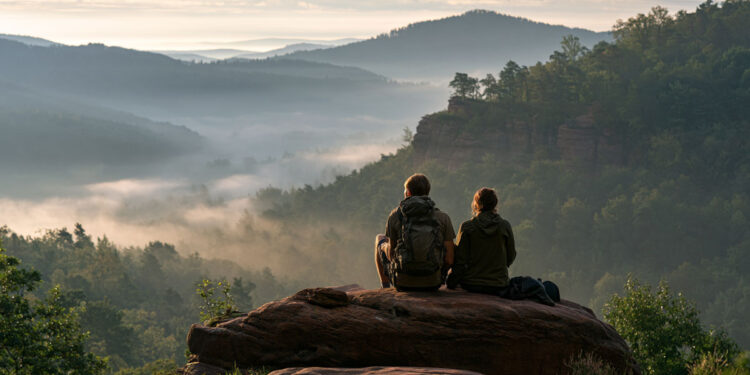
That decision tends to be driven, for most visitors, by one of two things: walking or wellness. The two are not as separate as they might seem. The Palatinate Forest is the largest contiguous forest in Germany, a UNESCO Biosphere Reserve of around 1,800 square kilometres, and it is threaded with a trail network dense enough that a week of daily walking would not require repeating a route. The Dahner Felsenland – the area around Dahn where the red sandstone formations cluster most dramatically – is the most visited section, and with good reason. Trails here pass beneath castle ruins, beside outcrops that have individual names and individual histories, and through forest that in certain conditions of morning light and low mist takes on a quality that is genuinely difficult to describe without reaching for the word “enchanted.”
Spending a week here in this way – walking in the morning, returning to a well-designed spa in the afternoon – is a combination that the better hotels in the region have built their entire proposition around. The spa and luxury hotel in Germany that the Palatinate produces at its best is defined by its relationship to the landscape outside it: gardens large enough to qualify as parks, natural swimming ponds open through the seasons, sauna areas designed around forest views rather than tiled corridors. The wellness offer in this region is genuinely sophisticated: beauty centres with nine or more treatment rooms, wine-based treatments using extracts from the Palatinate vineyards, yoga and Pilates programmes that use the outdoor environment rather than a studio. Awards from Spa Award juries and Wellness Heaven guides have followed the investment.
The food completes the argument. The Palatinate sits on one of Europe’s more interesting culinary fault lines: Rhineland tradition to the north, Alsatian lightness to the east across the Rhine. A hotel kitchen that takes that position seriously – sourcing from both sides of the border, working with a wine region that produces some of Germany’s most underrated Rieslings and Pinot Noirs, treating the cheese course with the respect that proximity to France demands – makes dinner feel like a reason to stay rather than an obligation to get through.
Slow travel, in the end, is not a pace so much as an intention: to be somewhere specific, chosen for what it actually is, without the ambient pressure to be somewhere else. The Palatinate Forest accommodates that intention better than most.