Yorkshire’s Nordic Lineage, From Jorvik to Today

You sit in a car and see place names like Selby, Whitby or Grimsby flash by. It’s not just a random way of forming names. The ‘-by’ at the end comes from the Viking word for ‘farmstead’, a Danish term that took root in the country over a thousand years ago and has never really gone away.
When the Vikings stayed, the terminology stayed too
In 866 the Great Heathen Army took York and renamed it Jorvik as a capital of the Danelaw, the northern and eastern stretch of England where Danish, Swedish and Norwegian settlers lived under their own laws for the best part of two centuries. The Norse did not raid there. Instead they moved in. And they married in and made the land theirs.
The system they brought went further than the names. Yorkshire was carved into three Ridings, a word straight from Old Norse þriðjungr, a third. North, West and East stayed on the map until 1974. Each Riding was split into wapentakes, gatherings where free men signalled their ‘yes’ by lifting weapons, vápnatak in the old tongue. Even the word law is Norse. So is bylaw: the law of a by, the village’s own rule.
A region that likes things calm
The language is one thing, but there is more to this than that. You can see the special Yorkshire temperament most clearly in the afternoons at the workplace, where the break is rarely a big thing like in the rest of the UK. A short coffee at a window or a walk between meetings, sometimes a snus pouch tucked under the lip during a stretch of work.
The instinct for the unshowy and non-prestige is something the rest of the country has long noted about Yorkshire, which tends to favour the long pub conversation over the loud one. Small things done properly without fanfare or commentary. Most of the Nordic habits have roots following the same exact pattern.
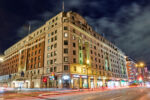
The style is different as well. Sit in a Leeds or Sheffield coffee shop and notice the distinct Nordic feeling. Pale wood, soft lighting and a counter that looks more like it belongs in a Danish kitchen than an English one. This sort of thing is now recognisable everywhere and seems modern. They are not.
A map written in old norse
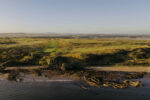
If you look at Yorkshire on a map, you’ll find traces of the past. Selby on the Ouse, Whitby on the coast, and Scotton Thorpe in the former West Riding. Even Langthwaite, in the northern dales. All these places bear witness to the arrival of the Scandinavians, who established farms there and named them in the same way as in Norway, Sweden and Denmark.
The density of the pattern is the whole point. No English region has so many of the same place-name suffixes brought by Norse settlers. A ‘-by’ is a farmstead. A ‘-thorpe’ is a smaller, secondary settlement near a larger one. A ‘-thwaite’ is a clearing. Read them in sequence and the county is essentially a Norse atlas with English road signs laid over the top. Most towns in Yorkshire with these endings look English now.
The landscape carries the same words. A stream is a beck. A high open hillside is a fell. A narrow wooded ravine is a ghyll. A dale is a valley, a garth is a yard. Walkers in the Dales use them without thinking. Not only did the language stay in the names of places, but it stayed on the tongue too.
Walk into a Yorkshire kitchen and you will still hear a grandmother call a small child a bairn, the same word that the Swedish and Norwegian barn. It has been kept alive on this side of the North Sea for a thousand years by people who had no idea they were being Viking about it.
The new layer, softly added
There is one unusual thing about Yorkshire’s relationship with Scandinavia: the newest things and the oldest things turn out to be the same, but in different clothes. The county did not absorb the Nordic elements in a hurry. Instead it has incorporated them, kept the parts that fit, named the village in Norse and gone on as if nothing happened. The new layer sits as quietly as the old one did.
A Leeds café that could pass for an Aarhus one. A short walk instead of a long meeting. A snus pouch parked under the lip during a stretch of focused work. The short breaks so unfamiliar to the rest of the country are something you will notice when you travel to Scandinavia, and notice again when you’re back home.
Isn’t this the thing about learning about places that is most fascinating? To understand why a county can differ so much from another, and to learn the history behind it.