A Beginner’s Guide to Professional Lash Lift Kits
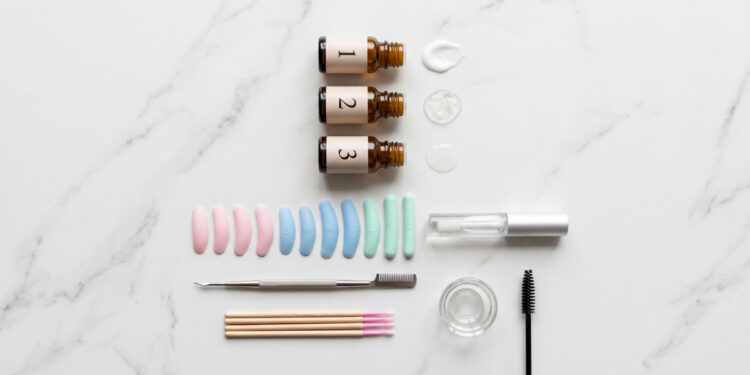
A lash lift raises and curls a client’s natural lashes without extensions. It reshapes the hair itself and the result holds for several weeks. For the technician, it’s a standalone service with its own products, tools and safety protocol. Here is what a kit contains, how its chemistry works and what to check before buying your first.
How a Professional Kit Differs From a Home One
A professional lash lift kit is a system: several solutions, silicone shields and a set of tools. A step-by-step eyelash lift kit guide from London Lash walks through the full INLEI protocol. This article takes a different angle: what goes into a kit and how to pick your first.
The real divide is chemistry and who is allowed to use it. Lifting solutions are built around thioglycolic acid (TGA) and its salts. Under EU Cosmetics Regulation (EC) 1223/2009, those ingredients are permitted for lash curling only in professional products, capped at 11% and banned from consumer DIY kits. That is why a professional kit demands training and a strict protocol. Insurance bodies such as ABT (the Association of British Therapists) ask for accredited training before they will cover you and most insurers expect a patch test beforehand.
What Is Inside a Professional Kit
Contents vary by brand, but the working minimum is the same:
- Lifting lotion (step 1) softens the lash and makes it pliable.
- Fixing lotion (step 2) sets the new shape.
- Nourishing solution (step 3) conditions the lashes once the shape is locked in.
- Silicone shields or rods in several sizes shape the curl.
- Fixing gel holds the lashes against the shield while the solutions process.
- Applicators such as micro brushes, mixing sticks, non-metal bowls and a layering tool.
INLEI labels these as Form 1, Fix 2 and Filler 3, plus Fixing Gel, a set of shields and tools for layering and separating. The Grab & Go starter kit runs the same protocol with fewer pieces.
How the Two Lotions Work
Step 1: Softening
A lash holds its shape thanks to disulphide bonds (S-S) between the keratin protein chains. The lifting lotion breaks those bonds and the lash relaxes onto the shield. The active agent is either thioglycolate, which works faster and suits dense, healthy lashes, or cysteamine, which is gentler and better for fine or sensitive ones. The solution is alkaline, around pH 8 to 9.5. Below that range the bonds barely open; above it, the cuticle takes damage.
Step 2: Fixing and Conditioning
The fixing lotion rebuilds the disulphide bonds in their new position, so the lash keeps the curl. This stage is acidic, which closes the cuticle back down. In good formulas the oxidiser is hydrogen peroxide (H2O2); as it breaks down it leaves only water and oxygen, with no harsh residue. Sodium bromate is cheaper, but it leaves acidic salts on the lashes and is banned in some countries, including Italy and Canada, so many brands now formulate fixers without it. A nourishing solution finishes the treatment. Keratin added to the lifting lotion itself does little because the active chemistry cancels it out.
A lash lift does not curl the lash mechanically or add anything to it. It rearranges the bonds inside the hair. That is why the result does not drop after a couple of days. It grows out as the lash itself grows.
Shields and Timing: Where Beginners Slip Up
Shield size sets the curl. A small shield gives a tight curl at the root, while a large one gives a soft, open lift. When you test-fit without glue, the lashes should cover about 70% of the shield. Too small and the tips kink into an L shape. Too big and you get almost no lift.
Processing time depends on lash thickness and the specific formula. INLEI’s own ranges:
| Lash type | Lifting (Form 1) | Fixing (Fix 2) |
|---|---|---|
| Fine | 6-8 min | 4-5 min |
| Medium | 8-10 min | 5-6 min |
| Thick | 10-12 min | 6-7 min |
A few mistakes catch most beginners. Over-processing the lifting lotion turns lashes brittle. Uneven layering leaves a patchy result. Oil or make-up on the lashes blocks the solution from penetrating. Too much fixing gel does the same. And always time each eye separately.
Safety and Patch Testing
The eye area is sensitive and thioglycolate, cysteamine and the supporting ingredients can all trigger irritation or contact dermatitis. A patch test is not optional. Apply a small amount to the inner forearm 48 hours before the appointment. Repeat it for every new client, after a break of more than six months and whenever the client’s health changes.
A lash lift is not suitable with conjunctivitis, blepharitis, a stye, or active eczema or psoriasis around the eyes and not within six weeks of LASIK or PRK. Contact lenses come out before the session and stay out for 24 hours. Professional solutions carry a label to rinse the eyes immediately on contact and you must keep an SDS (Safety Data Sheet) for every product under UK COSHH rules. Keep your wording to clients careful: no thioglycolate-based solution can be called “safe for the eyes” or “hypoallergenic.” A reaction is always possible, which is exactly why the patch test matters.
Choosing Your First Kit
Training first, stock second: without a certificate you cannot get insured. Match the formula to your client base. Cysteamine is the gentler option for fine or sensitive lashes, while thioglycolate handles dense ones. Look for a kit with several shield sizes and a sodium-bromate-free fixer. Whether you go for a full kit or a Grab & Go starter depends on how much you are working.
In the UK, materials for a single treatment cost roughly £10 to £16, while the service goes for £40 to £80 by region, so the gross margin per session is high. A lift holds for six to eight weeks and fades as the lashes grow out, so clients rebook on that cycle and that margin repeats with every visit.
Conclusion
Executing a professional lash lift requires an uncompromising balance of chemical precision, anatomical awareness, and strict regulatory compliance. As a technician, your success relies entirely on respecting the science behind the treatment rather than treating it as a superficial beauty routine.
To ensure safe practice and consistent clinical results, keep these core principles at the forefront of your business:
- Prioritise Accredited Qualification: Secure a recognised certification and robust liability insurance before introducing this service to your treatment menu.
- Source Regulated Chemistry: Select reputable product ranges formulated strictly without sodium bromate, ensuring the active lifting agents align with UK and EU cosmetic standards.
- Enforce Strict Safety Protocols: Treat the 48-hour patch test, contraindication screenings, and eye-safety guidelines as absolute, non-negotiable prerequisites for every appointment.
By maintaining these high standards of technical proficiency and client care, you mitigate the risk of chemical damage, protect your business reputation, and deliver predictable, high-margin results that secure long-term client retention.