Why Preventive Dental Care Is the Investment That Pays Every Other Dental Bill Forward
The most expensive dental care is not the unexpected one; it is the one that is a consequence of a problem that was not diagnosed, managed or treated for as long as it needed to be. In the long run, the best investment you can make in your oral health is to seek consistent preventive care, and that’s where practices like Michael Kelly Dentistry can help you make prevention a reality.
What Preventive Care Actually Encompasses
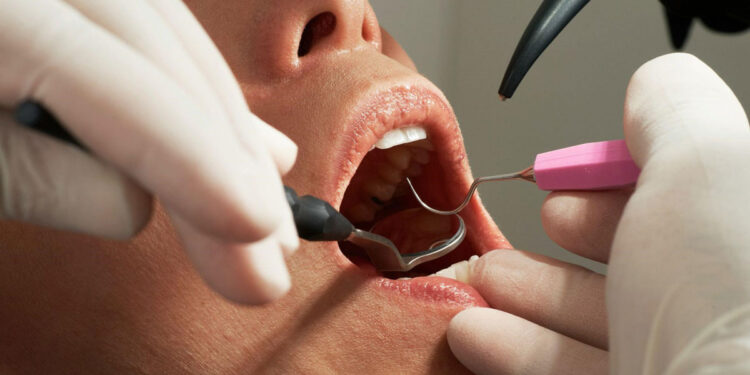
Preventive dentistry is more than just your twice-a-year visit. It involves professional cleaning to remove the calculus deposits, which are impossible to remove by brushing, detailed examination of the soft and hard tissues of the mouth, radiographic assessment to see if there are any changes in the bone or decay which the naked eye can’t see, and personalised guidance on the home care routines most relevant to your specific oral health profile. All of these parts help to create a clinical picture that enables problems to be identified and addressed at the least intrusive and least costly level of intervention.
The Clinical Progression That Prevention Interrupts
Dental disease does not just happen out of nowhere; there are stages of disease,e and each stage is a time of opportunity to alter the outcome with timely intervention. Fluoride treatment and better oral hygiene can reverse early-stage enamel demineralisation. A filling can be used to treat established but contained decay. If the decay has progressed to the pulp, then the root canal treatment is necessary. If an infection has progressed to the underlying bone, extraction and replacement with an implant or bridge may be required. The financial and clinical gap between the first and final steps is significant, and the way to prevent the process from stalling is to ensure regular preventive care.
Gum Disease and the Consequences of Late Detection
Periodontal disease is one of the most prevalent causes of adult tooth loss and is among the most often neglected conditions in general dental care. Gum disease itself, in its early stages, may be difficult to notice, and the symptoms may be easy to shrug off, such as some bleeding when brushing or sensitivity at the gum line. Still, bacteria are accumulating, and the inflammatory response is already impacting the supporting structures of the teeth. However, it can be halted with a combination of professional cleaning and regular monitoring before it reaches a point where bone loss and tooth mobility are the only signs of the condition.
The Relationship Between Oral Health and General Health
The relationship between oral health and systemic health is more well-known than you may think. Chronic periodontal disease is linked to increased cardiovascular risk, challenges with blood glucose control for diabetics, and complications in pregnancy. Dental care that helps keep oral bacteria under control not only helps maintain oral health but also supports overall body health. This connection makes preventative dentistry more important than just dentistry.
Why Regular Examinations Catch What Patients Cannot
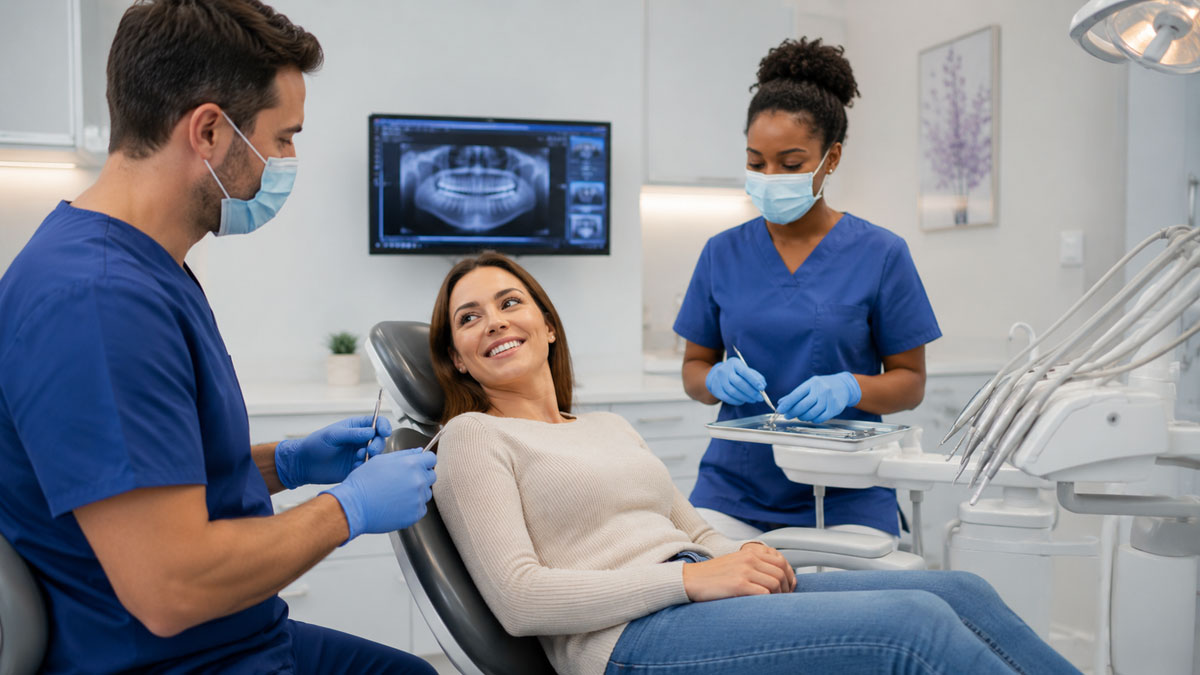
Many of the diseases that preventive dentistry is meant to detect are asymptomatic or cause no pain at the time of detection. Clinical findings such as decay between teeth, early changes in the soft tissues, first signs of wear from bruxism and beginning bone loss around tooth roots all need professional assessment to identify. When these conditions manifest in the patient, the necessary intervention is more complicated than it would have been if performed earlier. Regular examinations can provide a clinical baseline for measuring change and a framework for identifying deviations from that baseline before they become a treatment challenge.
Professional Cleaning and What It Achieves
Over time, even the most comprehensive at-home oral hygiene regimen leaves some areas of the mouth uncleaned properly. Brushing and flossing can’t reach the mineralised deposit that forms when plaque hardens, and it tends to build up in the most hard-to-reach places: along the gum line, between the teeth and on the surfaces of back molars. Scaling removes this accumulation, reduces the number of bacteria it holds, and provides a closer relationship between the gum line and the tooth surface, which helps prevent bacteria from getting in. The benefit is that the teeth are fresher and cleaner, and there is a cumulative benefit from regularly removing calculus, which helps prevent progressive gum recession over the years.
The Economics of Prevention Versus Remediation
There is a predictable, modest cost for a routine exam and professional cleaning. The cost of a root canal, crown to protect the tooth that has been treated or an implant to replace a tooth lost to advanced decay or periodontitis is several times more, not to mention time, discomfort and recovery of the treatment. As in most health disciplines, the financial arguments for consistent preventative care do not need complex modelling.
Building a Preventive Routine That Works for You
Consistent dental care is the value of preventative care. One good look, after years of neglect, is telling but not sufficient. The real key to long-lasting oral health is a program of regular professional care and an effective home hygiene routine customised to your particular needs, which includes the design of your dentition, restorations in your mouth, your individual risk for decay or gum disease, and your diet and lifestyle. It’s that combination, over years, not months, that separates patients with dental issues from those without.