What Your Choice of Hobby Says About How You Unwind – According to Science
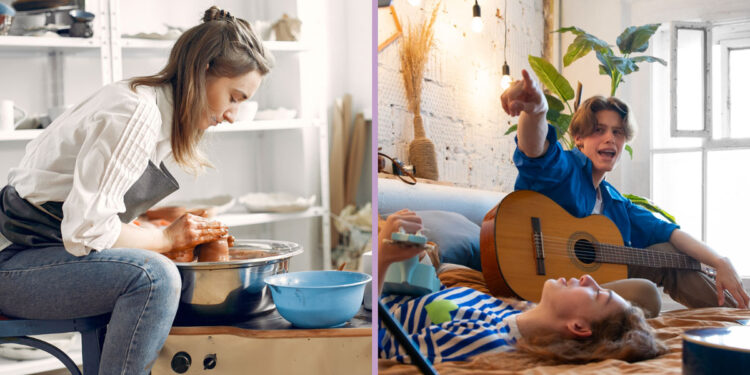
Ask someone what they do to relax and you’ll get answers ranging from gardening to competitive card games to staring at a wall in a room they call a “reading nook.” Turns out, the hobby you gravitate toward says something surprisingly specific about how your brain actually recovers from stress.
The Science of Switching Off
Psychologists have known for a while that leisure activities reduce stress, but a 2025 scoping review published in the Journal of Psychosocial Nursing went further. It found that hobbies consistently lower symptoms of anxiety and depression across multiple independent studies – not just in theory, but in measurable clinical outcomes. The reason is fairly simple: hobbies give the brain a structured focus that has nothing to do with obligation. You’re choosing to do it. That alone triggers a different reward pathway than anything on your to-do list.
One framework researchers keep coming back to is the split between “restorative” and “stimulating” leisure. Some activities restore energy by dialling down input; others rebuild it by channelling attention outward. Neither type is better than the other – the question is which fits how your nervous system actually operates. That’s where personality comes in. Goal-driven activities with built-in feedback, like those found at www.bestcasino.com/, sit firmly on the stimulating end of that spectrum, and for plenty of people that kind of focused engagement is genuinely energising rather than draining.
Here’s a rough breakdown of how different activity types map onto recovery styles:
- Solitary, low-stimulation (reading, journalling, knitting) – restores by reducing external input
- Active and social (team sports, group classes, pub quizzes) – restores by redirecting energy outward
- Goal-focused with feedback (gaming, puzzles, strategy games) – restores by delivering a measurable sense of progress
Introvert, Extrovert, or Somewhere in the Middle
The introvert/extrovert divide is one of the most studied dimensions in personality psychology, and it maps onto hobby preferences in ways that hold up consistently. Introverts recharge through solitude; extroverts recharge through social engagement. This isn’t pop psychology fluff – research in Personality and Individual Differences found that introverts experience deeper “flow states” during solitary activities than social ones, while extroverts reported equally intense flow in both settings. The introvert who spends two hours reading after work isn’t being antisocial. They’re doing exactly what their neurology requires.
A 2024 Adobe Express survey of 2,000 UK adults found reading was the most popular unwinding hobby at 35%, followed by walking at 30% and cooking at 29%. Only 6% said they did nothing at all. The more interesting number, though: one in four UK adults – roughly 12.8 million people, per National Lottery research from the same year – consider scrolling through social media a genuine hobby. A third of those admitted that time spent doing so was stopping them from pursuing other interests. That’s a lot of people whose main relaxation method is something they’d quite like to give up.
Why “Active” Doesn’t Always Mean What You Think
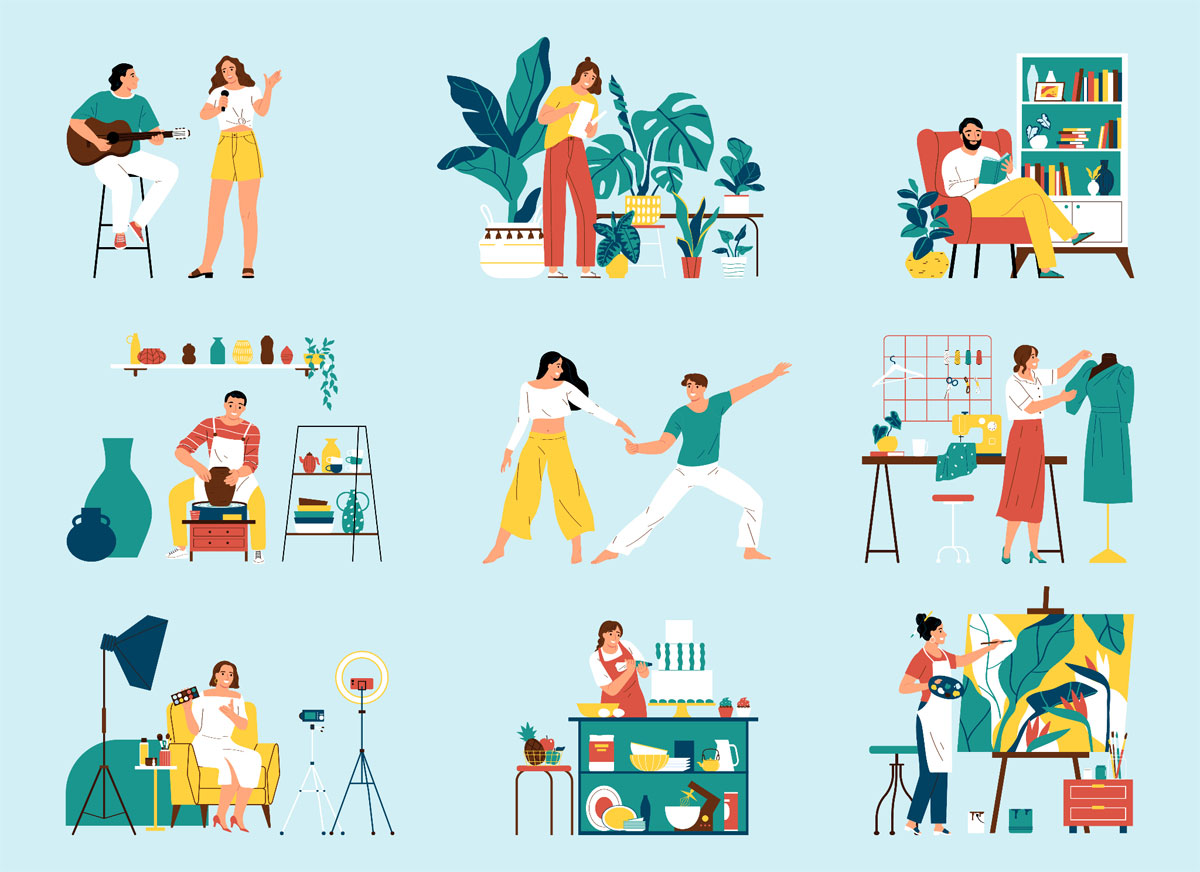
There’s a common assumption that physically active hobbies are more restorative than sedentary ones. Research doesn’t really back this up. The key variable isn’t movement – it’s engagement. Studies measuring cortisol levels found that creative hobbies like painting, writing, and knitting produced measurable stress reduction through absorbed attention alone. The brain, when genuinely occupied with a task it chose, stops running its background worry loop. Even if you’re sitting still.
Some hobbies are better at producing that absorbed attention than others. Activities with clear rules, immediate feedback, and some kind of progression tend to pull you in more completely. That’s why crosswords, card games, and strategy-based games often feel more genuinely restoring than an evening of television, even though TV asks nothing of you at all. Effort, counterintuitively, is part of what makes it work.
What tends to separate a genuinely restorative hobby from one that just fills time usually comes down to a few things:
- You chose it freely, with no external pressure attached
- It demands enough attention to crowd out rumination
- It offers some feedback or progress – finishing a chapter, completing a level, harvesting something you planted
- It doesn’t activate the same stress responses as work (deadlines, judgment, other people’s expectations)
The Passive Recovery Problem
Scrolling, watching, half-listening to a podcast – all of these feel restful because they require almost nothing. The catch is that they rarely produce the kind of recovery that comes from real engagement. Across multiple studies, passive screen time shows little correlation with reduced stress the following day, while active hobby engagement – even something gentle and low-effort – does.
None of this makes television harmful or scrolling a moral failing. It just means the brain tends to recover better when it actually has something to do. The knitter who feels unusually calm after an hour of counting stitches is not imagining it. The person who ends a long evening of Netflix feeling oddly tense is also not imagining it.
The 2024 surveys put this in plain numbers: 59% of UK adults said they wanted to try something new, and 38% were actively trying to cut their screen time. The gap between knowing and actually doing it, of course, has something of a hobby all of its own.