Does Homework Still Make Sense in 2026?
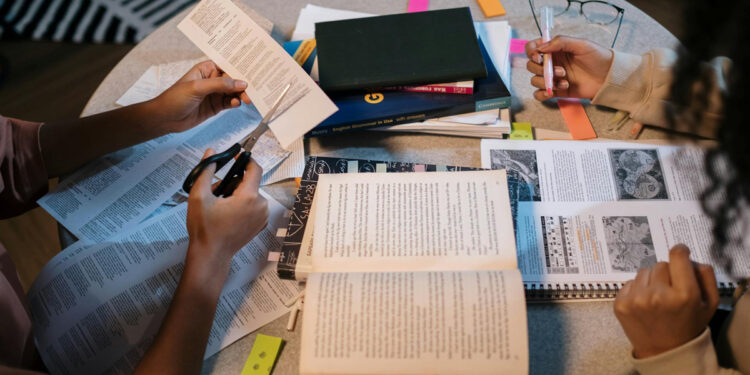
For generations, homework has been treated as a given. You go to school, you come home, and you keep working. It’s so normal that questioning it can feel almost rebellious. But in 2026, with how learning, technology, and student life have changed, it’s worth asking a serious question: does homework still make sense?
This isn’t about laziness or students wanting an easy way out. It’s about whether homework, as we know it, actually helps students learn or whether it’s just a habit we haven’t outgrown yet.
Homework was designed for a very different world
Homework became common during a time when classrooms were crowded, resources were limited, and learning was mostly memorization. Teachers needed a way for students to practice skills outside school hours. At the time, that made sense.
But today’s students don’t live in that world anymore.
In 2026, most students will have access to digital textbooks, recorded lectures, AI-powered study tools, and instant information. Learning doesn’t stop when the bell rings. In many cases, it never really starts in the traditional way. Students watch videos, rewatch explanations, pause lessons, and search answers on their own terms.
The original purpose of homework was reinforcement. The problem is that much of today’s homework doesn’t reinforce understanding. It reinforces compliance.
More work doesn’t mean better learning
There’s a persistent belief that the more time students spend on homework, the smarter they’ll become. However, excessive assignments often lead to chronic stress without meaningful gains in understanding.
Most people can relate to the experience of memorizing information just long enough to pass a test, only to forget it a week later. That’s not learning; that’s survival.
Students aiming to break this cycle of busywork often turn to specialized resources to reclaim their focus. Many incorporate https://edubirdie.com/ into their routine to handle repetitive tasks and technical formatting.
By delegating these time-consuming requirements, they can direct their mental energy toward mastering core skills. It is a shift from simply filling time to actually building knowledge.
Homework often punishes students for having a life
One of the biggest problems with homework is that it assumes all students live the same kind of life.
Some students go home to quiet spaces, reliable internet, and supportive families. Others go home to jobs, siblings to care for, noisy environments, or unstable situations. Homework doesn’t level the playing field. It widens the gap.
In 2026, many students are balancing school with part-time or even full-time work, mental health challenges, and financial pressure. When homework eats into sleep, family time, and basic rest, it stops being a learning tool and becomes a burden.
Learning shouldn’t require exhaustion as proof of effort.
Technology has changed how practice works
Practice still matters. No one is arguing that students shouldn’t apply what they learn. The question is where and how that practice happens.
With adaptive learning platforms, instant feedback tools, and AI tutors, students can practice skills more efficiently than ever before. Instead of spending two hours stuck on problems they don’t understand, students can get guided support in real time. For younger kids specifically, a Brighterly reading tutor works the same way, catching a stumble before it turns into a habit
In many cases, meaningful practice can happen during class, in shorter focused sessions, or through optional resources tailored to individual needs. The idea that everyone must take home the same assignment no longer matches how personalized learning works in 2026.
Homework hasn’t evolved at the same pace as the tools meant to support learning.

The mental health cost is hard to ignore
Student burnout isn’t a buzzword anymore. It’s a reality.
Anxiety, depression, and chronic stress are common among students at all levels. Homework often plays a role in that pressure, especially when it piles up across multiple classes with little coordination.
When students feel like they are constantly behind, constantly failing to keep up, and constantly judged by unfinished assignments, motivation drops. Learning becomes something to fear instead of something to engage with.
In 2026, mental health awareness has improved, but school systems still struggle to adjust expectations. If an assignment damages a student’s relationship with learning, it’s worth questioning its value.
Not all homework is useless
It’s important to say this clearly: homework itself isn’t the enemy.
Well-designed homework can be meaningful. Reflection-based assignments, creative projects, real-world applications, and self-paced exploration can deepen understanding. Reading something thought-provoking and coming to class ready to discuss it can be powerful.
The issue is that much of the homework students receive isn’t designed that way. It’s repetitive. It’s rushed. It’s assigned because “that’s how it’s always been done.”
In 2026, intention matters more than tradition.
What should replace traditional homework?
If homework no longer makes sense in its current form, the next question is obvious: what should take its place?
First, more learning should happen during school hours. Class time can be used for guided practice, discussion, collaboration, and feedback instead of passive lectures.
Second, optional and flexible practice should replace mandatory one-size-fits-all assignments. Students learn at different speeds and in different ways. Giving them choices builds ownership.
Third, learning should connect to real life. Projects that involve problem-solving, creativity, or personal reflection stick longer than worksheets ever will.
And finally, rest should be respected. A tired brain doesn’t learn well. Protecting time for sleep, hobbies, and relationships isn’t lowering standards. It’s supporting actual learning.
So does homework still make sense?
In 2026, the honest answer is: not in the way we currently use it.
Homework made sense when resources were limited and classrooms couldn’t adapt to individual needs. That’s no longer the case. Continuing to rely on outdated methods doesn’t prepare students for a world that values critical thinking, adaptability, and lifelong learning.
The real question isn’t whether students should work hard. They already do. The question is whether the work we give them is worth their time.
If homework helps students understand, grow, and connect learning to their lives, then yes, it still has a place. But if it exists only to fill hours and enforce discipline, it’s time to let it go.