Wuthering Heights (2026) – Film Review

Director: Emerald Fennell
Cast: Margot Robbie, Jacob Elordi, Hong Chau
Certificate: 15
By David Reid
Perhaps the first aspect to note in Emerald Fennell’s new adaptation of Emily Brontë’s 1847 novel is the use of inverted commas around the title. This gives licence to suggest that this is the writer-director’s own interpretation of the work, rather than a wholly faithful version. Although this may understandably frustrate purists, modern film portrayals of the story tend to concentrate on the first half of the book. In what would otherwise be a lengthy cast of major characters, that would almost certainly require a much longer run time than the two-and-a-quarter hours on offer here.
After introducing the period setting, the film presents the young Catherine (Charlotte Mellington) and the young Heathcliff, played by Adolescence’s Owen Cooper. Catherine’s father, played by Martin Clunes, brought the boy back from a trip across the country to raise as his own. The children have formed a close bond, with both displaying elements of stubbornness in their natures, no doubt facilitated by their respective adverse circumstances. It is also noticeable that Martin Clunes, playing a curmudgeonly, gambling, alcoholic single parent, has a tendency to steal any scene in which he features. As the adult versions of the main players appear, Margot Robbie’s Catherine Earnshaw speaks with a cut-glass English accent, perhaps to emphasise the contrast in character with Jacob Elordi’s Heathcliff and his Yorkshire brogue.
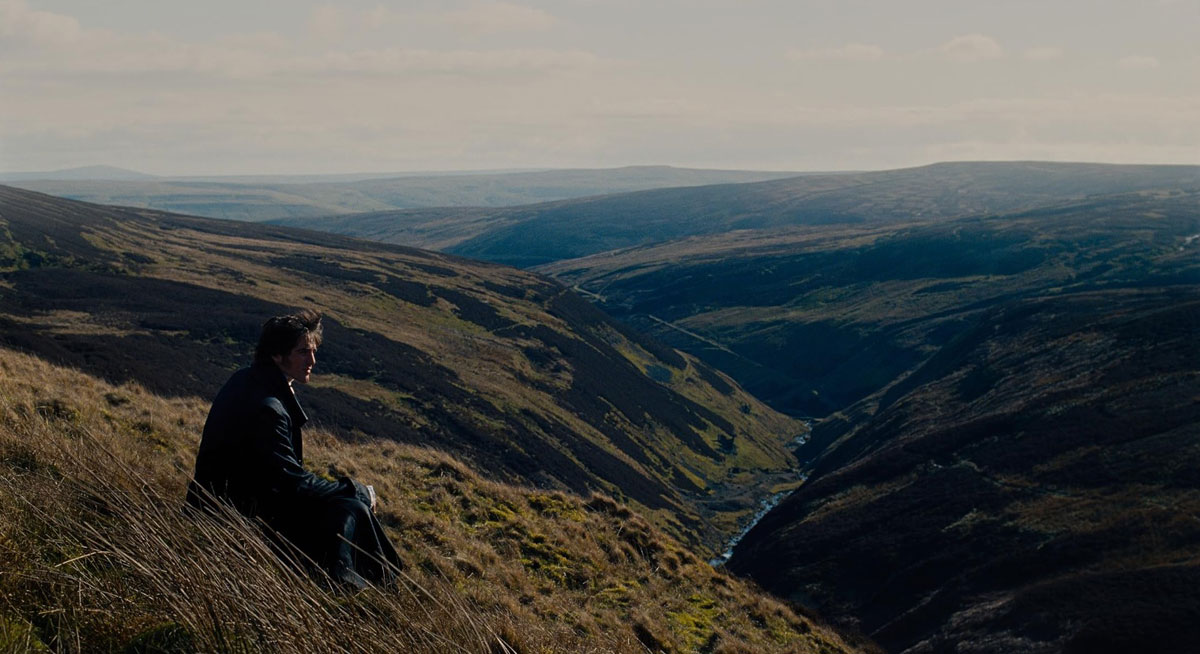
“Foreboding”
As lead actors, Margot Robbie (Barbie) and Jacob Elordi (Frankenstein) are well matched here, with their evident on-screen chemistry clear for all to see. They remain fond of each other, although Cathy cannot consider him a serious suitor, given his servant status within the family household at Wuthering Heights. Her friendship with the Linton family, who live a few miles away, offers an escape into a more opulent world at Thrushcross Grange, which has the appearance of a Regency-era mansion, full of colour, inhabited by Edgar (Shazad Latif) and his sister, Isabella (Alison Oliver). Nelly, the narrator in the novel, becomes more of a confidant to Cathy here (as played by Oscar nominee Hong Chau). This building could not present more of a contrast with the dour, dark, foreboding Wuthering Heights, where the darkened room interior shots appear to have been given a blue hue by Oscar-winning Swedish cinematographer Linus Sandgren, which serves to emphasise the cold atmosphere.
A love triangle develops between Heathcliff, Edgar and Catherine. However, a misunderstanding causes Heathcliff to depart, seemingly for good. From the soundtrack, ‘Open Up the Dark Eyed Sailor’, by Olivia Chaney, brings a welcome folk music-like sensibility to the proceedings at Catherine’s wedding. This blends seamlessly with Charli XCX’s and La La Land Oscar-winning composer Anthony Willis’s contributions. The latter’s use of piano, cello and violin, in particular, heightens the emotions within key scenes, as Heathcliff returns from an extended absence as a wealthy gentleman, emerging from the swirling Yorkshire mist. This is a film which looks as well as sounds good. It was filmed in the higher-resolution VistaVision format, which, although first used around seventy years ago, has only recently returned through last year’s The Brutalist and One Battle After Another, both visually stunning on the big screen. Special mention must go to the vision and execution of the costume designer, double Oscar winner Jacqueline Durran.
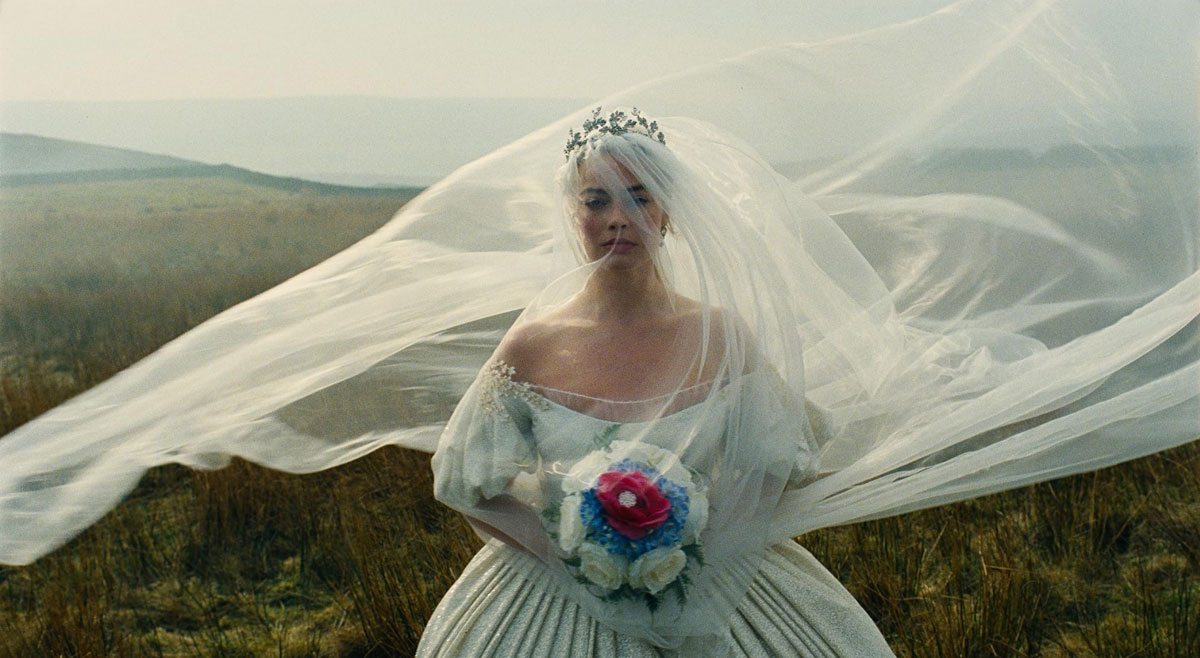
“Stylistically faithful”
Emily Brontë’s novel was firmly fixed within the Female Gothic category. With the brutish Heathcliff as a central character, and with patriarchal oppression, domestic abuse and class repression as themes, set in the desolate landscape surrounding Haworth, it was controversial and confusing to many at the time of publication, but has become iconic and beloved since. As the director’s third film, this choice was unsurprising, following on from the themes of female emancipation and class resentment in her first two full-length pictures: Promising Young Woman and Saltburn. Fennell’s film pays homage to an era in which the male voice was the loudest, and it is stylistically faithful to the source novel. However, whilst Heathcliff is portrayed as rustic, the viewer does not gain a sense of the verbal belligerence and financial cruelty the character in the novel is capable of inflicting upon others over successive generations. The focus here is upon his capacity for love. There is no doubt that Cathy and Heathcliff’s love for each other is passionate, sultry and deeply felt. The sometimes BDSM-styled sensuality is not gratuitous in nature. In the film, their love is illicit; in the book, their yearning is unrequited.
Ultimately, this is a glossy film which works well on screen, but may not live long in the memory. It works as a bodice-ripping tale in a similar way to how Netflix’s Bridgerton reflects Jane Austen’s fiction. In that way, it may reflect modern tastes and should be a resounding hit at the box office, although, for this reviewer, whilst there is much to admire here, Emerald Fennell’s debut feature remains a much greater achievement in her body of work to date.

David’s passion for cinema began with his first trip to the movies during The Troubles in Northern Ireland, where a screening of Jaws was dramatically interrupted by a bomb scare. Growing up in such an environment made entertainment scarce, deepening his appreciation for film and the arts. Over 25 years ago, he won a national film review competition, earning free cinema for life. This experience has allowed him to explore a vast range of genres and storytelling techniques. His reviews aim to provide insightful commentary without spoiling key surprises, helping audiences decide if a film is for them. He believes great filmmaking is rooted in strong storytelling, engaging viewers through narrative depth and presentation.